This is no ordinary plant. You might say “well, Kirsti you think all plants are special,” and that’s true. But I have a real love affair going with this one.
Overwhelm is a real thing in our society. We all know the feeling of a too-long to-do list. And the overly full chest, overly heavy feeling that accompanies difficulty focusing in the face of a long list of tasks. And the anxiety that accompanies that has a way of setting in and staying.
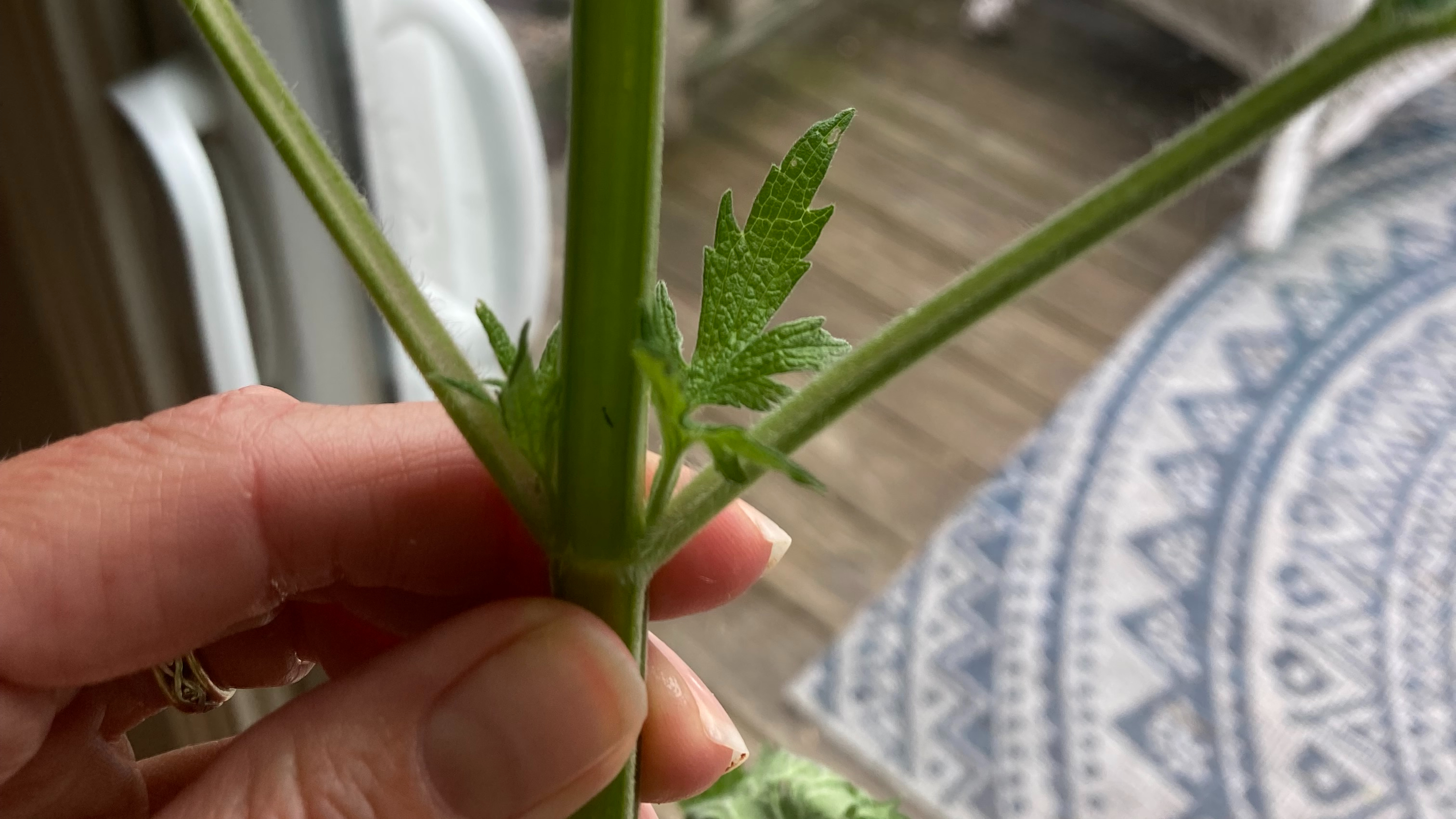
Motherwort, pictured here, is widely used to truly calm that kind of anxiety in just such moments. A few drops of the tincture under the tongue definitely chases the feeling of overwhelm away. It’s legendary, used also in blood pressure remedies, to strengthen the cardiovascular system, and as support for premenstrual and menopause symptoms. If I had only known about it years ago, I could have eased many years of intense premenstrual cramps.
Just the other day I was out walking with a clinical herbalist, Stephan Brown, in his garden here on the cape. I’ve been taking motherwort tincture for months, originally to help with my blood pressure, I soon learned it benefits my mental state, as well.
But I have never seen the plant growing and I could not have identified it if it jumped up and slapped me in the head.
Knowing nothing about me or the remedies I favor, Stephan plucked a stem of motherwort from a nearby plant and presented it with a flourish. Herbalists and plants are both naturally psychic. There’s no getting around it.
square stems of the lamiaceae; motherwort has an especially strong stem
I went back today to gather some with his permission. A member of the mint family with the characteristic square stem of that species, you can see the shape in the picture above, making it easy to identify.
The lovely leaves are drying now, which means I can make my own bottle of tincture. Pure magic.
Aloe is popular. You can buy it in most garden shops, I’ve even seen it for sale at the grocery store! It’s beautiful, easy to grow, and it’s medicine! Most folks know it’s great pain relief for a sunburn, and promotes rapid healing and tissue repair. It also has the same pH as our skin, and is a natural sunscreen.
You can make aloe vera gel at home very easily:
cut a firm leaf from your plant
slice it open (on a plate is best).
Use a tablespoon to scoop out the gel.
optionally, but this is really much nicer, puree it in a blender.
Some time ago a friend approached me about his case of chronic colitis. Which is to say — he has had it for a long time and it’s pretty miserable, and did I have any suggestions?
Off the top of my head, other than demulcents, which are mucilaginous herbs that coat and soothe inflamed or irritated membranes, I did not. But I did a bit of reading and found that there is an herbal formula that has been used for IBS and similar problems related to the digestive system for a long time with good results, and has been adapted for use with modern constituent derivatives, etc. Looking at the ingredients list, it seemed to me that the formula addresses inflammation and virus in the gut. None of the ingredients had contra-indications that discouraged me, though these are definitely medicinal, rather than tonic herbs. By that I mean that these herbs are known to have powerful and immediate effects, as opposed to herbs that are gentler and can be taken daily and indefinitely.
I decided to make the traditional formula myself and share it with him.
There are versions of the formula that can be purchased online and have been modified from the traditional version by their makers, but I found an “original” formula that did not include derivative compounds, and purchased those herbs.
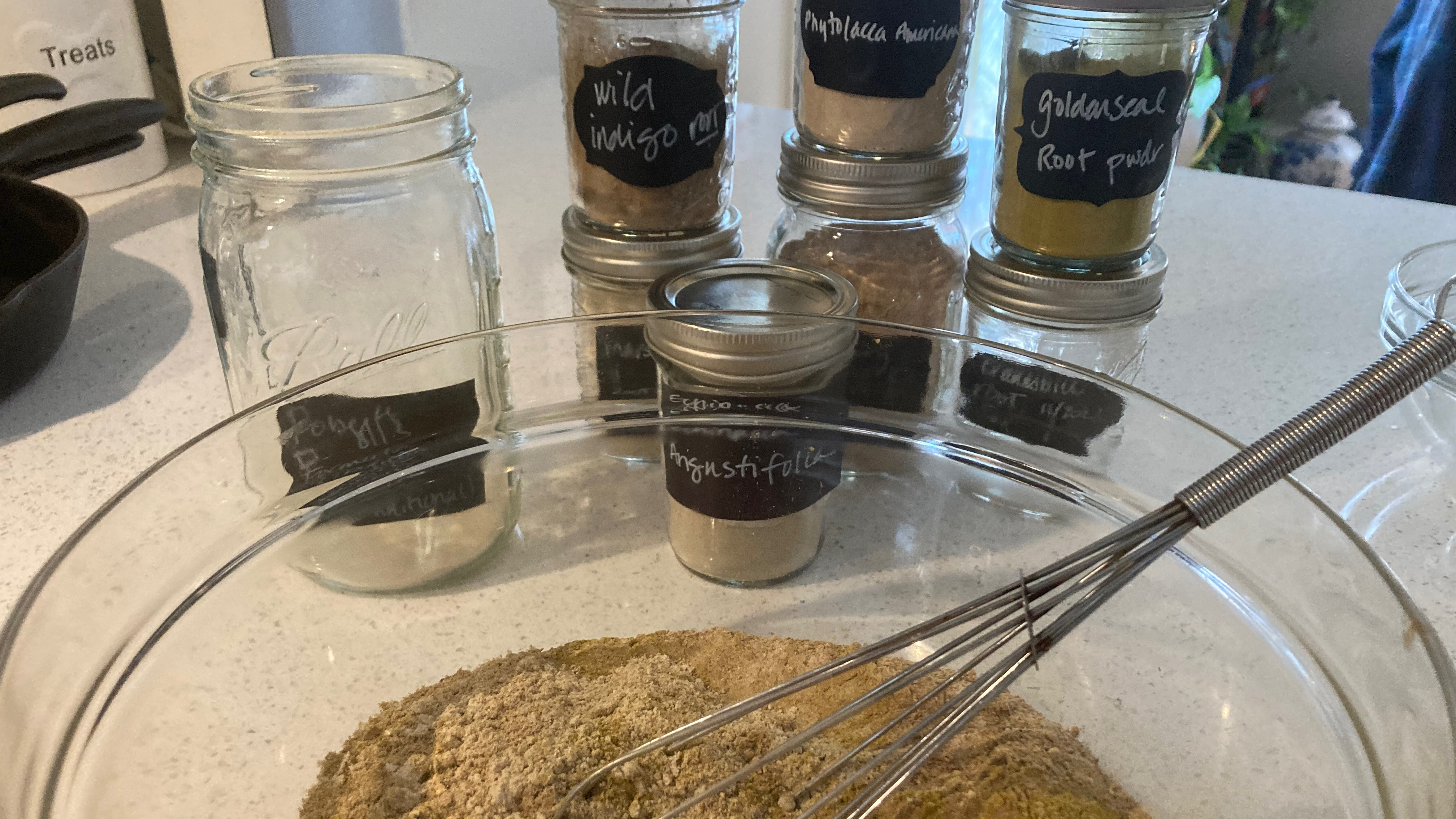
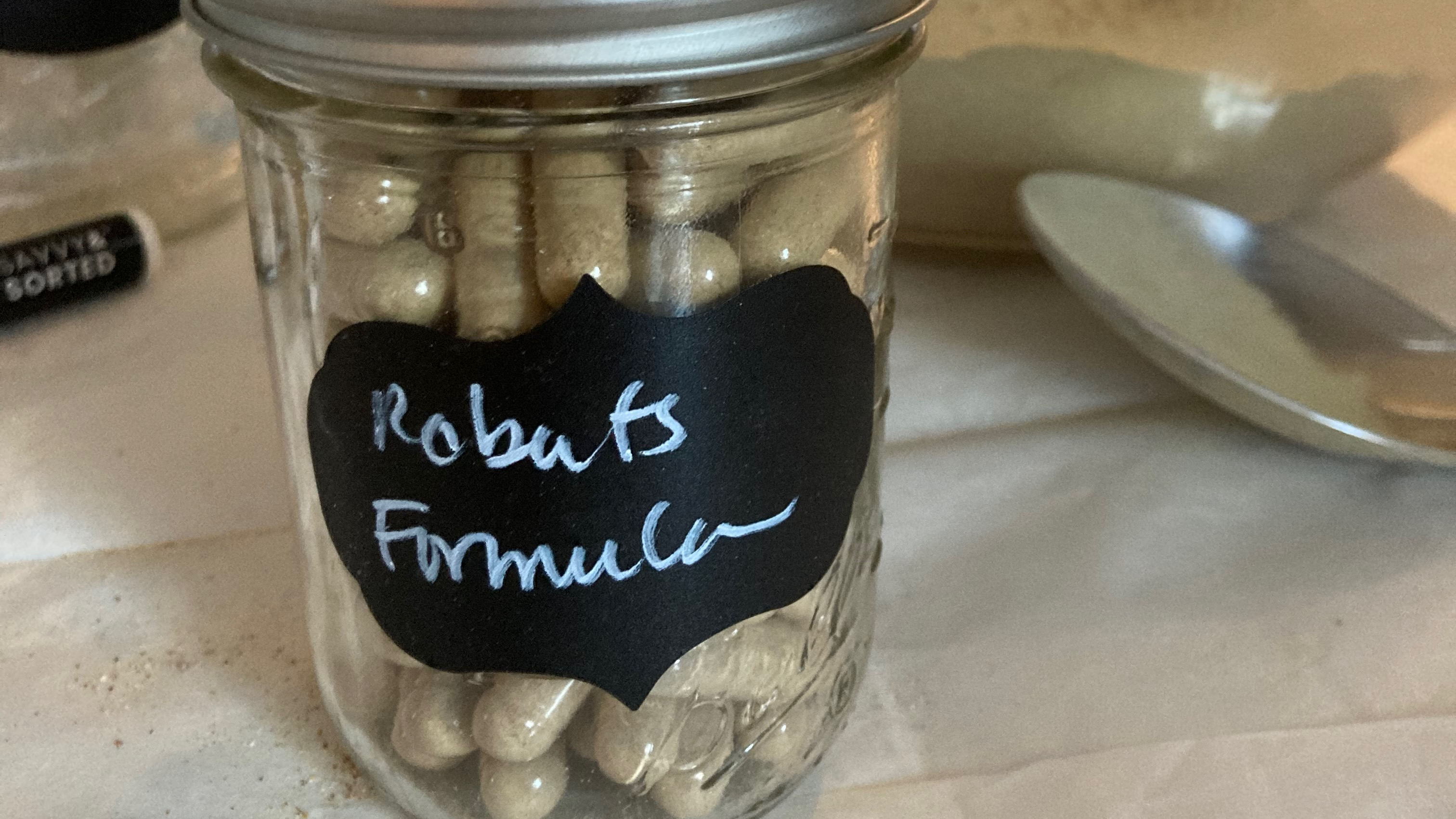
the individual ingredients in Roberts formula pictured here and combined at front in a mixing bowl before encapsulating
I will give away the ending before continuing this story: this formula worked for him. It corrected a chronic and persistent case of colitis that had been present for over a decade in a matter of weeks.
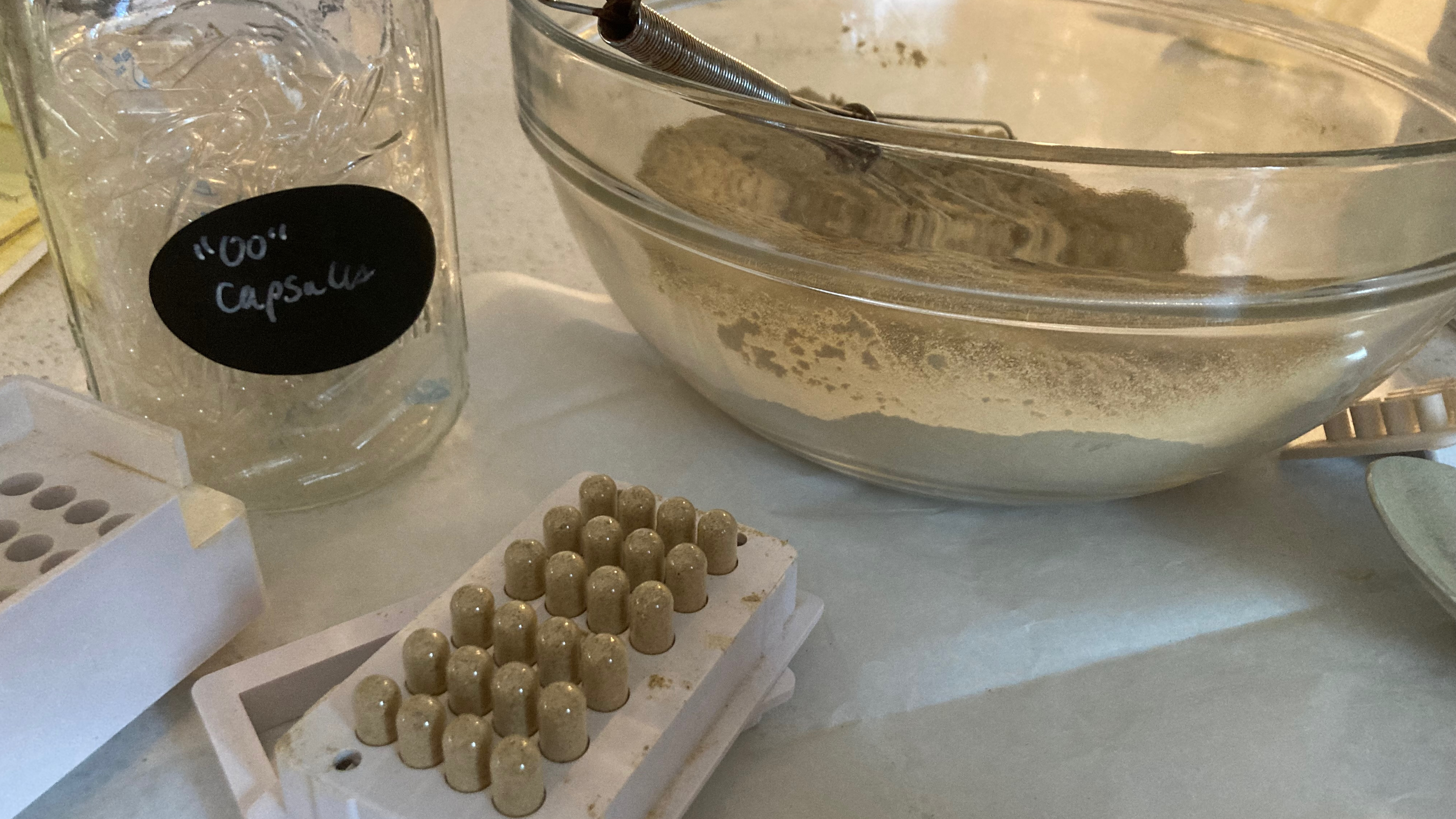
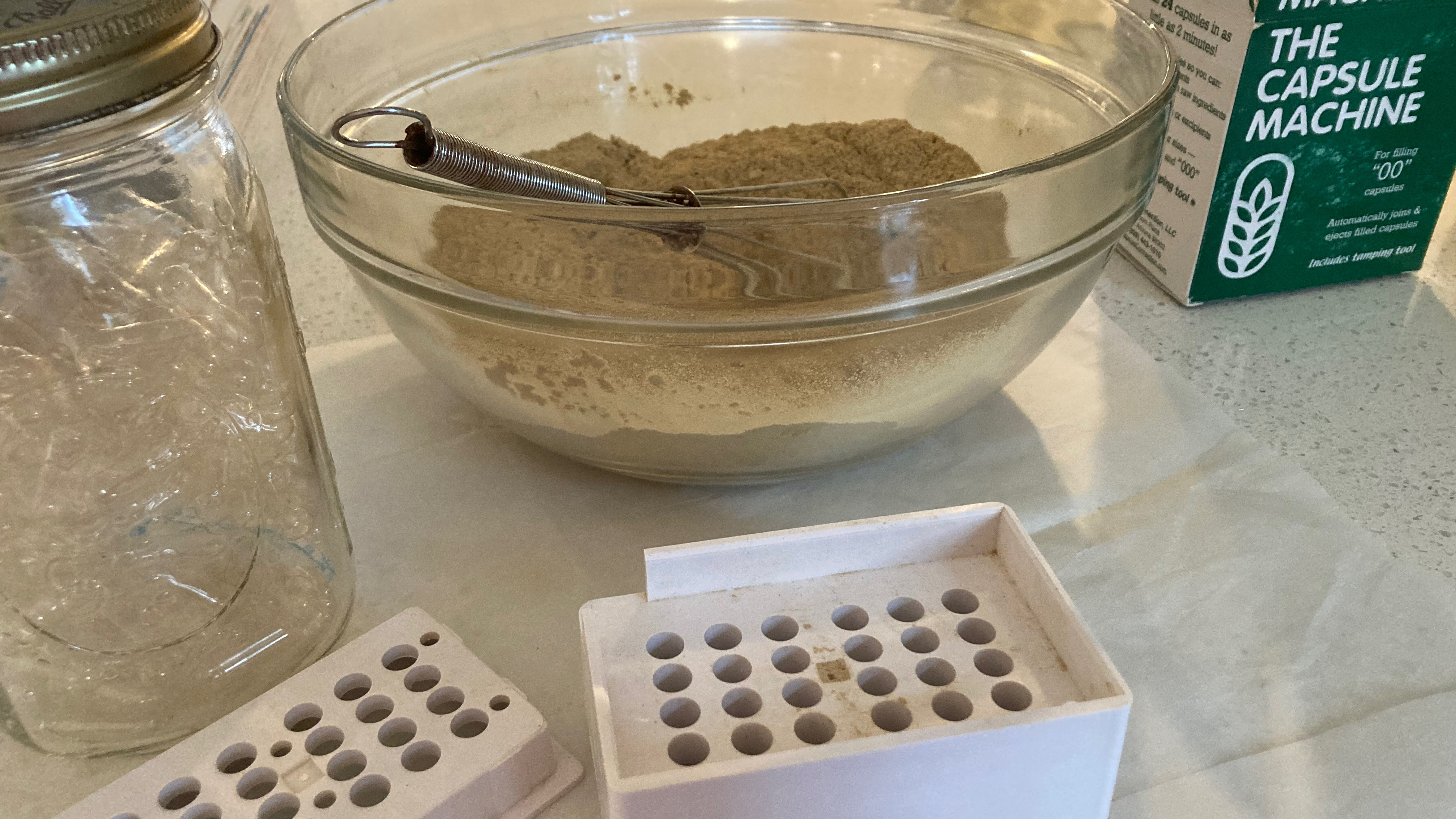
encapsulating Robert’s Forumula
When the herbs arrived I had to grind some in order to be able to compound them, so I spent a Saturday morning grinding and combining them in equal parts. The old formula did not specify the quantity or ratio of each herb. I know from my herbal studies that often we combine in equal parts unless we know an herb (like cayenne or in goldenseal, for example) should be used more sparingly. I made the decision to combine them in equal parts.
The ingredients in the formula I made: Purple Coneflower root (Echinacea angustifolia), Marshmallow Root (Althaea officinalis), Wild Indigo Root (Baptisia tinctoria. note here the original called for a different genus – Baptisia australis, but the tinctoria was available and I judged the substitution to be fine), Slippery Elm Bark (Ulmus rubra), Poke Root (Phytolacca americana), American Cranesbill Root (Geranium maculatum), Goldenseal Root (Hydrastis canadensis. A note, this is an endangered species at this time so I was careful to order it organically cultivated. Please don’t buy this wildcrafted.)
We know that herbs are the original medicine of the people, and that they are powerful and effective, but I was surprised at how quickly and effectively this formula worked because traditional allopathic medicine had tried and failed to treat him. The truth is that allopathic medicine often is more quickly effective for some things – for killing pain, for example. But in this case these herbs, which are whole foods, worked with his body to remedy a problem that had been serious and persistent for many years, and had not been treatable with allopathic medicine.
Some of the versions of this formula you can buy are liquid and arguably more easily absorbed. I felt that in this person’s case the ease of the capsules would help ensure he’d take them, and the pure nature of the herbs compounded together with no “carrier” ingredients (tincture or syrup) felt intuitively right and was more accessible to me.
If you have questions about this please feel free to reach out to me. I’m not a doctor, just a simpler herbalist, but I felt sharing this was important because of the profound effect it had for my friend , and I know that many people have similar digestive problems.
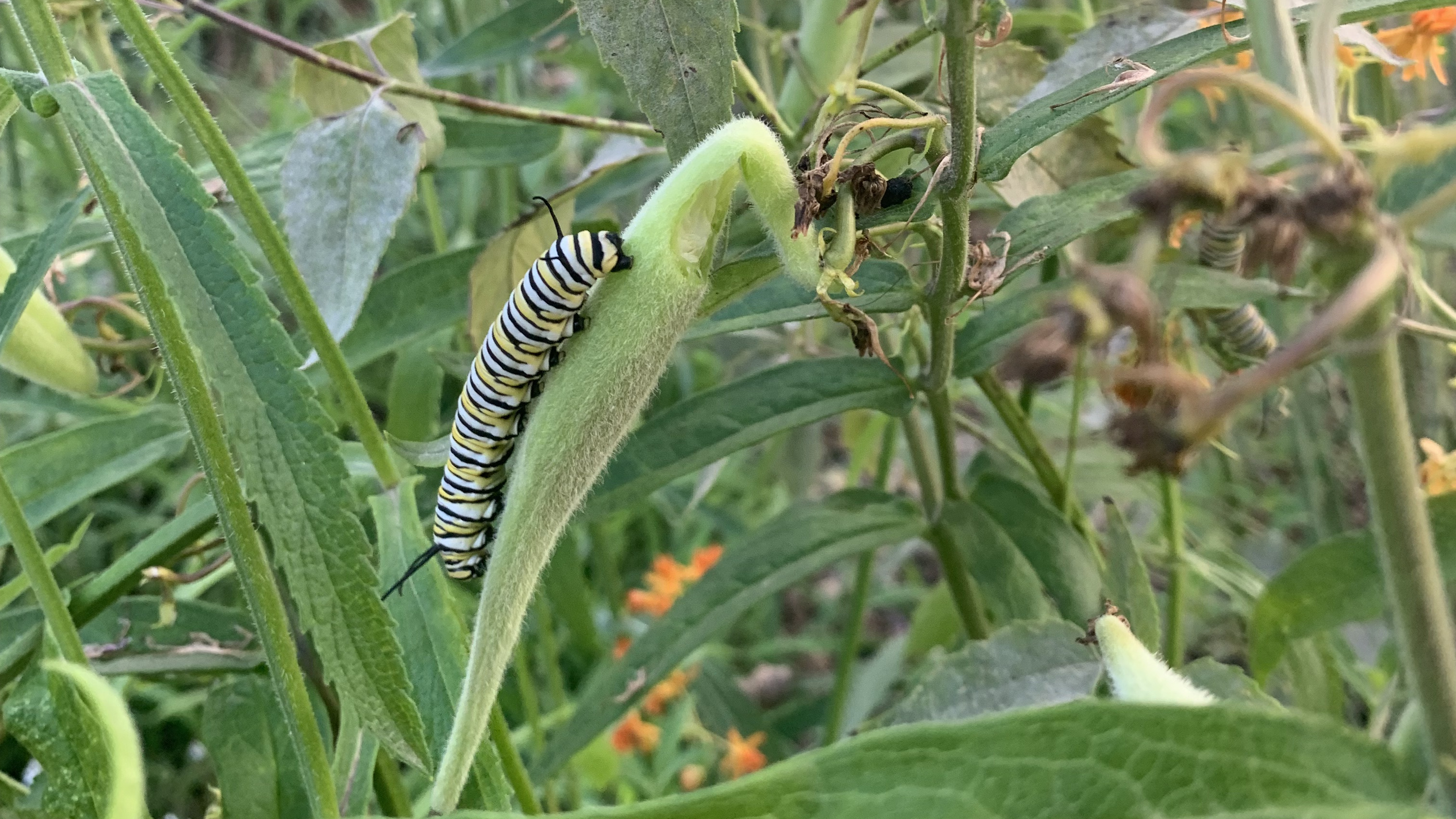
Monarch Caterpillar on Asclepius pod in our herb garden
We’ve moved house. Aside from adapting to a new place and new people, I’m adapting to new land, new trees, new plants, and … a blank-ish slate. The people that lived here before weren’t gardeners, so aside from some unhappy grass and some mature perennial plantings that include hydrangeas (it being the cape and all), it’s a brand new start.
Since it’s seed catalog time and it’s too cold to be outside in the garden, my obvious move is to start planning the kitchen garden. Oh, yeah! Culinary and medicinal herbs, flowers and vegetables.
There were some key things about the herb garden at the farm:
I could walk barefoot out my kitchen door on a stone walkway to cut herbs for dinner. Pure bliss.
It faced east, which meant it got great morning sun and much of the garden didn’t bake in the late afternoon summer sun. The bits that did get that sun where home to things like chamomile, lavender, verbena, hyssop, zinnia, monarda, yarrow … plant spirits that were happy with that setting.
There was a window from the kitchen onto the garden, so I had a good view of butterflies, hummingbirds, yellow finches, dragon flies, and other gorgeous pollinators and birds that hung out in the garden
There’s nothing like looking out the window and being confronted by a humming bird staring back at you or a praying mantis perched on the window frame. It’s like living in a charmed movie.
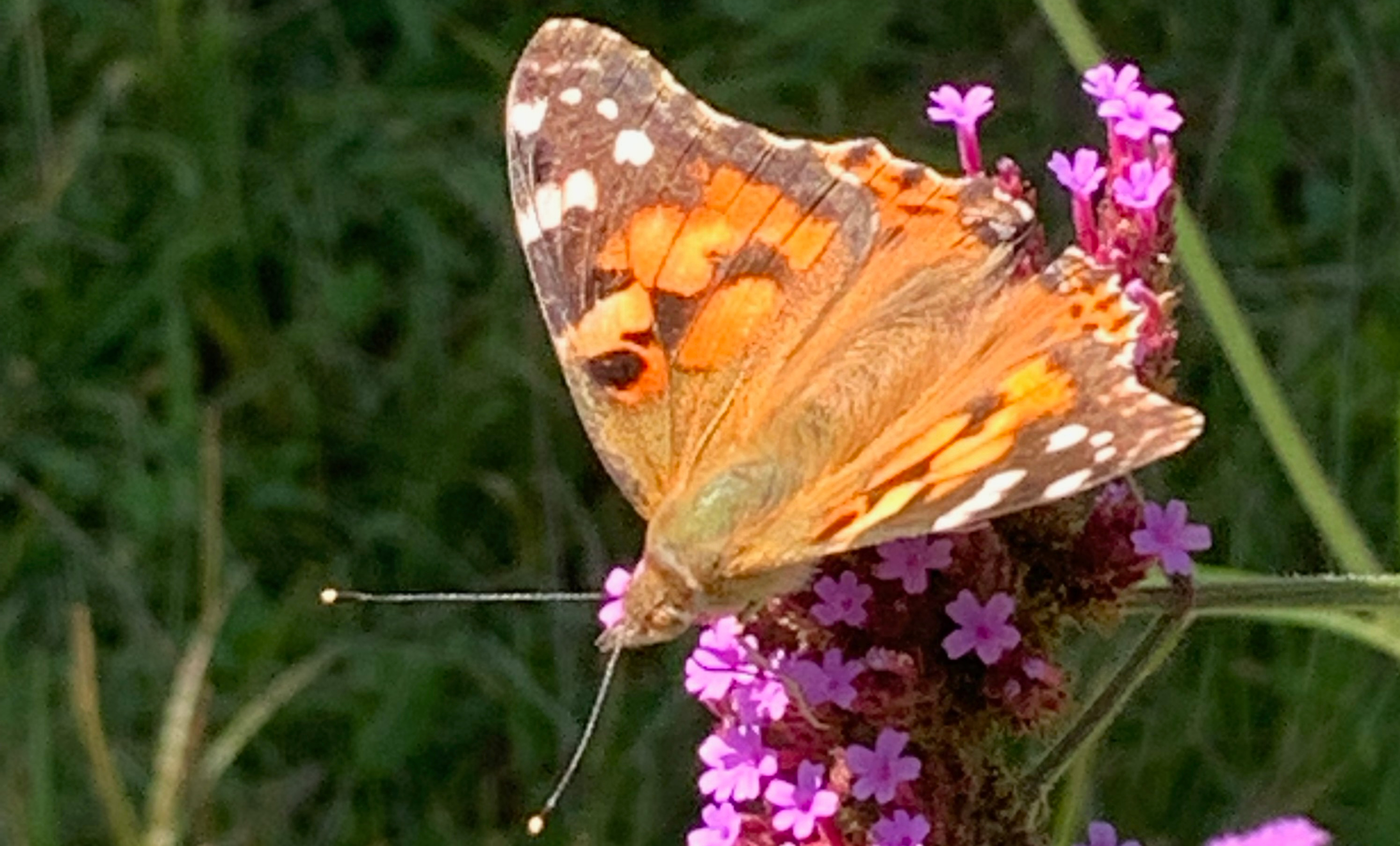
monarch on verbena flower
So I’m choosing a spot next to the back yard slider from the kitchen area. An east facing area isn’t available without removing trees, so I’ll have to make a spot that’s south west of the kitchen work, and I’ll ask our carpenter, Norm, to make stairs on that side of the deck so that I can walk directly to the garden … barefoot!
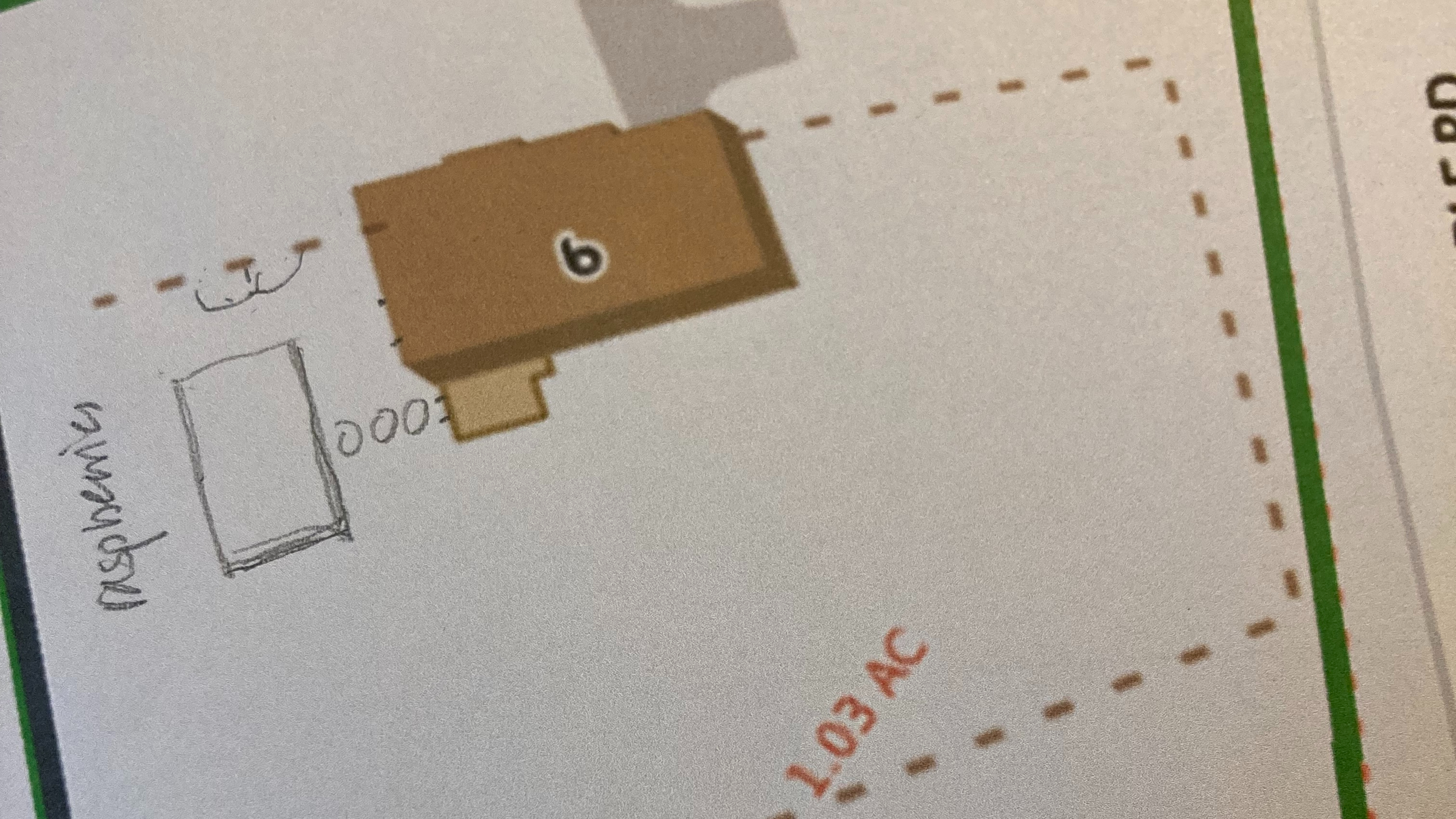
tax map of our new house with a box where our new herb garden is going to be
Other things to prep – the soil here is full of clay and sand, which will mean compost, and lots of it, some stepping stones from a local landscape store, and a clear calendar starting in April.
garlic scrapes last year
This year I planted garlic in October in a bed I threw together hastily just to the south of where the herb garden is going to be, so I will design the gardens and their contents over coming weeks … more to come as the plan and the work evolve!
Over the years it seems like I’ve heard about cholesterol continually. My first husband was always avoiding eggs and butter because cholesterol ran in his family, and my current husband Jon is locked in mortal battle with the matter of whether to take statins, which give him muscle weakness.
Historically I’ve avoided medical literature because … well, it’s pretty dry. Recently, though, I sat down and read about cholesterol because I want to help Jon deal with it. I’m an herbalist and feel confident that if I help him modify his diet and supplement with supportive herbs and relevant lifestyle changes we can ward off his doctor’s requests that he take statins. The proof will be in the pudding of his next cholesterol screening, but in the meantime we’re on this train.
So, here’s what I learned about cholesterol, which turns out to have an actual purpose in our bodies:
“Stress, toxins, alcohol, and many other substances create free radicals in the body by catabolizing (breaking down) oxygen molecules into reactive oxygen species, which are single atoms of oxygen that have extra “unpaired” electrons. These “excited” electrons cleave onto other electrons in body tissues and walls of arteries, creating micro-wounds. This is the same process that causes metal to rust – aka oxidation…
… In order to repair damaged tissue, hormones signal the liver to release cholesterol, which is a life-saving endogenous antioxidant. Cholesterol repairs the wound. But when this type of oxidation is continual, day in and day out, the excessive wounding creates an immune response, which generates more tissue irritability and more cholesterol, and that builds up into plaque…
Paradoxically, “… the discovery of cholesterol plaque build up in arteries led to a misconception that high cholesterol is a cause of heart disease. In fact, one cause of heart disease is the inflammation that triggers the release of cholesterol…” (Maier, from Energetic Herbalism)
So, cholesterol serves a function in the body – it tries to protect the heart. And, heat and inflammation are healed by cholesterol. We are treating elevated cholesterol levels with statins, but we aren’t treating heat and inflammation with them. So we’re treating a symptom, not the cause of the problem.
… And statins can cause liver damage and the breakdown of muscle tissue. Maier says it is important to check liver function every 3-6 months when taking statins. I’ll ask if liver function tests have come up during Jon’s odyssey with statins – he hasn’t mentioned it.
So what are the recommendations for lowering cholesterol production/reduction of inflammation and heat of oxidation?
Lower Sugar Intake – sugar causes cell to make its own cholesterol, which isn’t taken up and contributes to ldl levels. (it’s such a bummer about sugar. it’s so tasty)
Consume antioxidants: red, blue, and purple berries, including aronia berries, blueberries, pomegranates, elderberries, and dark green vegetables
Sedative sour herbs: sumac (Rhus spp) and hibiscus help clear inflammation, also Roselle (H. Sabdariffa) has antioxidant effects, esp related to cholesterol.
1 clove of garlic daily
25 g of oatbran on breakfast cereal
1-2 tsp of oolong (especially Pu erh tea/day (from Ody, Complete Medicinal Herbal)
To treat high ldl cholesterol levels: Consume red yeast rice extract and CoQ10. Standardized extract, 600 mg., 2-4 times daily or we use Red Yeast Rice powder following package dosage instructions.
The traditional herb blend Guggul treats cholesterol in veins. Recommended: 25 mg 3x/day for 12-24 weeks
Some other interesting things to know aboutcholesterol and how it functions in your body:
Production of sex hormones, adrenal hormones including cortisol, corticosterone, and aldosterone
Production of bile
Necessary for production of vitamin D in the body
Important for the metabolism of fat-soluble vitamins
Insulating material for nerve fibers
Regulation of serotonin
Maintenance of cell membrane permeability
Essential role in preservation of memory
And about Red yeast rice extract - it is made from fermentation of rice with Monascus purpureus yeast. This is the substance statin drugs have been produced from and is as effective as statins but takes longer (~6 months) to have an effect on cholesterol levels and must be taken with CoQ10. CoQ10 is a hormone (called ubiquonone) which is found in every cell of the body and is stored in the mitochondria (organelles that power our cells). It also acts as an antioxidant. Statins cause so much damage because they severely diminish natural production of CoQ10. Red yeast rice does, too, but at a much lower rate.
It’s important to know that red yeast rices is a symptomatic treatment in that is lowers cholesterol levels but is does not treat inflammation, which is the cause of the elevated cholesterol production. (above from Maier, Energetic Herbalism)









 Backyard Botanics