We heard from the hospital this week that they are hoping to administer vaccinations for clinical care workers starting in mid-December. Huzzah. At 62 with heart disease Jon is a risk, and we worry all the time.
Still, the rest of us will wait and this winter will not be a festive one. Getting outside is always welcome, but there’s not much that’s green or blooming to see. The sun’s day is shorter and shorter … it’s definitely time to look for reasons to be cheerful, to find some surrogates for sun and company.
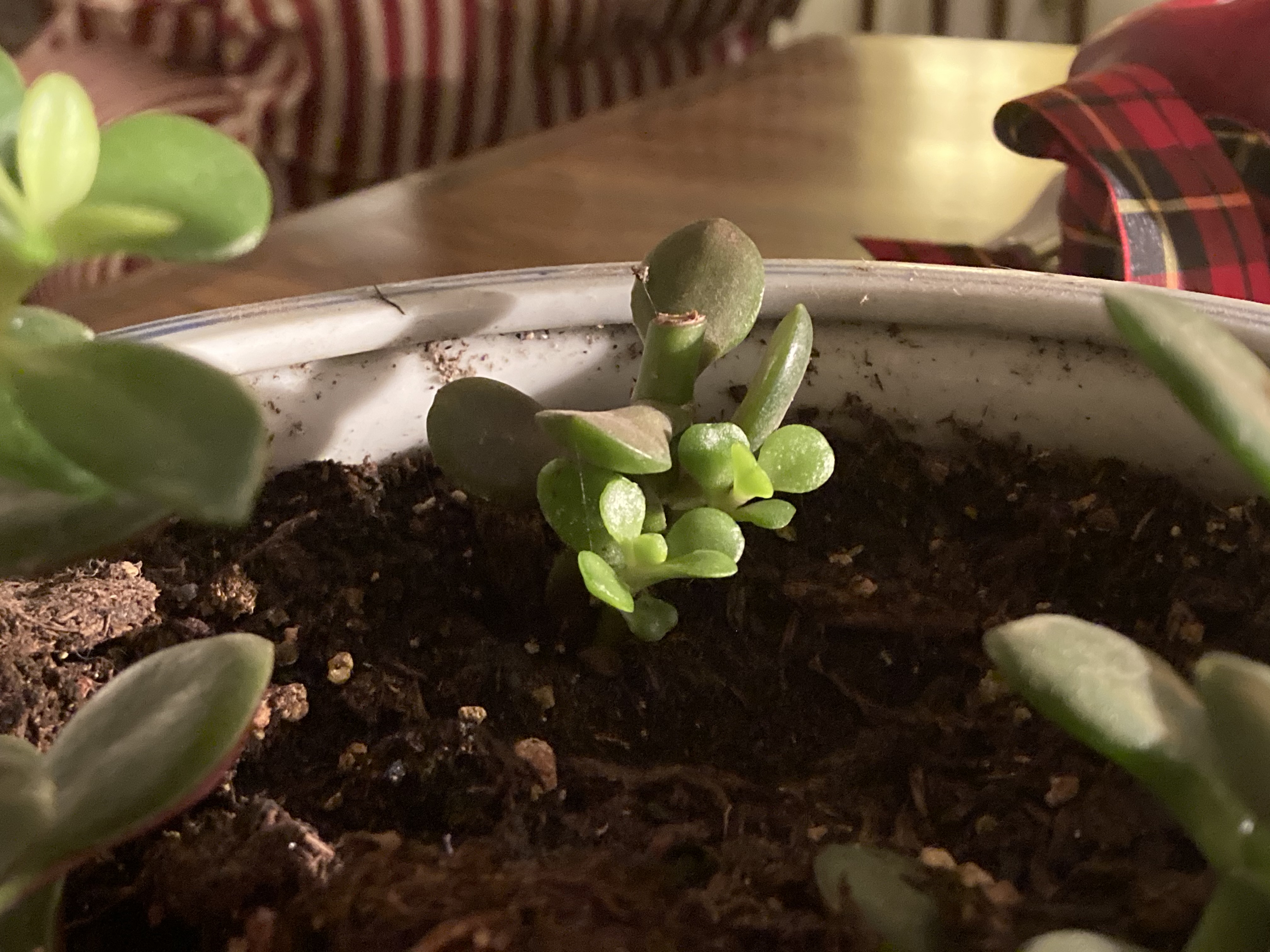
So, here’s one: little green babies. I love them.
In this case, jade babies. I bought a $3.00 tiny jade last year at Weston Nurseries. They had a table of tiny succulents that were no doubt intended for people wanting to create a little garden of succulents in a container. But this little plant caught my eye and I popped it into my cart. No other succulents, no container.
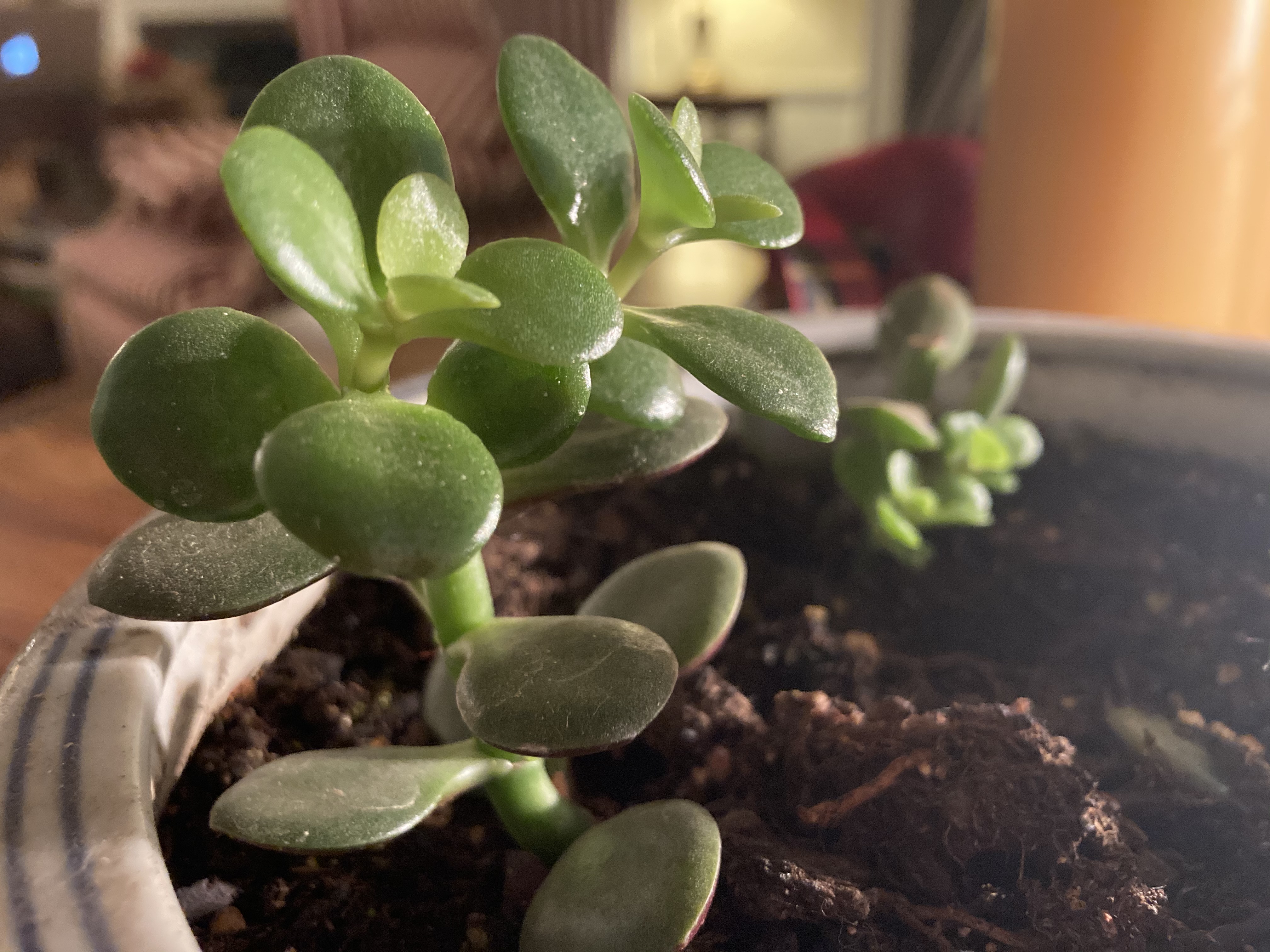
It became tall and leggy, gained no width, and was bending way over toward the window, top heavy and gimpy. So I snipped it, and snipped it again, nestling the cut stems into potting soil, and popped them into a window. I wasn’t sure what would happen but the plant definitely needed a haircut so why not give it a try? I watered them weekly (more or less) and this is the result.
Whenever I pass by them my eye catches the light, fresh new green of these little leaves, it’s a little having low maintenance kittens. So cute!
You can do this with leaves, too. If a jade sheds leaves you can lay them in the soil and water them. It takes a while but they root, and make sweet little plants.
They remind me that a little bit of care can go a long way, and a small thing can bring some happiness and pleasure. Even during the darkest days of a pandemic.
Pausing to contemplate what this blog will be about this year as winter descends I realized that for so many of us what matters is connection. A real, lasting sense of feeling tied to the things that matter, the things that sustain, nurture, and give us a feeling of place and belonging.
This blog, back in its earliest days, was intended to be an expression of that and increasingly I realize that plugging into planet is just as valuable and important to people (and me) as plugging into the internet is.
So to that end, this blog will pivot slightly (but not that much) in that direction, focusing on easy, hard, hopefully inspiring and accessible ways of tying into the planet in ways that support a feeling of connection to the food, smells, tastes and happiness that knowing your food, your plants, your flowers, and all of the blessings that plant life can bestow, bring.
There will be blogs about growing herbs, hemp, vegetables, pot (yes, cannabis), flowers (perennial, mostly), and even a nod to our chickens and bunnies, to come. Aside from eggs and love, the bunnies are a great source of fertilizer. You can grow in a small planter or you can plant a garden in the ground or you can create raised bed(s). Or anything in between.
Whatever you choose, may you find and create a source of joy, pleasure, investment, occasional annoyance, and most importantly, connection to the energy that gives you a sense of belonging and ownership on this spaceship we call Earth.
As we all carry on wrestling with keeping a safe distance and trying to find some “normal” in our lives, the notion of our interconnected ness is front and center. After all, sharing airspace has become a matter of public debate, personal anxiety, and for some, a death sentence.
In the yoga classes I attend and teach, we end our practice with the sound of Om, as a reminder that we are all interconnected. Never has that seemed more relevant.
If you stop to consider the effect of your choices, it’s humbling. For example, rushing to arrive somewhere you cut another driver off. It’s frustrating to that person, and they become agitated and pass that agitation on in their own driving. Or you stop to hold the door for someone else and they thank you in a way that makes it clear they appreciated the gesture. They go on to have a better day, thinking better of the world.
The real impact of the effect we have in our moment to moment way of being is felt by those closest to us, though. The person closest to you is your self. Starting there, showing yourself gentleness and kindness, is the key. If you speak to yourself the way you would speak to a person you care tenderly for, that kindness will empower you to offer kindness to those around you.
I notice when I am hard on myself I extend that same kind of expectation and judgement to the people around me. Not surprisingly that does not encourage harmony. So I’ve spent time over recent months trying to change that habit of mind; I’ve tried monitoring my thoughts and words, practicing gratitude, and meditating. All of those things are helpful and encourage calm. But the thing that really works is speaking to myself with kindness and then harnessing that same kindness when I speak to others.
I don’t know if that sounds hard to you but I found that it IS hard. We are so good at being our own critics that we usually don’t speak to ourselves with kindness. When I first tried it I didn’t know what to say to myself. Really, I had nothing nice to say? Nope. I couldn’t think of anything. So I wound up beginning with a loving-kindness meditation. That started the ball rolling for me.
As part of that meditation you have to extend wishes for well-being to yourself, those you care about, others that are not close to you and finally, you have to wish a “challenging” person well. Not surprisingly this was hard and I nearly lost interest in the practice because frankly it’s not fun to wish the challenging person I was thinking of well. HOWEVER, one of my yoga teachers, Jeff Convery at the Yoga Exchange Holliston, once suggested that we spend time on the first part – wishing ourselves well – for as long as that felt right, before moving on.
I embraced that advice with fervor, wishing good things for myself during meditation like a champ. May I be healthy. May I experience peace. May I be happy. May I feel safe. May I feel nurtured. May I feel supported. May I be healthy, peaceful, happy, safe, nurtured, supported … over and over. The outcome was that I felt healthier, more peaceful, happier, safer, more nurtured and supported (Go figure). And I had a lot more kindness to offer to other people, thanks to generating some for myself. True Story.
I’m still working this whole new way of talking to myself. I am no less ready to speak my mind if I feel someone has been thoughtless or impolite. But I think being kind to myself takes practice and is like a muscle — it performs better with practice.
Consider how your own mood, your words, your actions affect you and everyone around you and then tell yourself: may I be happy. May I be safe. May I experience peace, may I come into a giant inheritance. You can skip that last one if it’s too much.
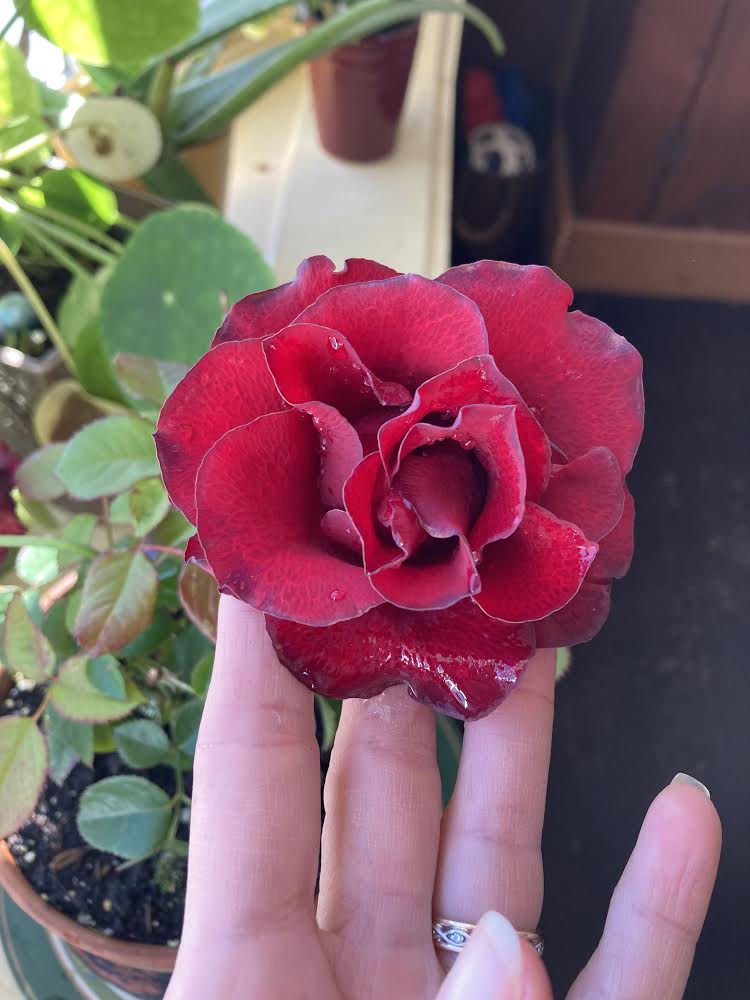
A rose accidentally left out in the snow, brought in to thaw. Resilient, beautiful.
There’s something about the word houseplants that makes me think of macrame hangers from the 70s (now enjoying a return) and my mother’s gigantic spider plants hanging in the window. But really, they’re cool. Stick with me for a minute and I’ll tell you what I mean.
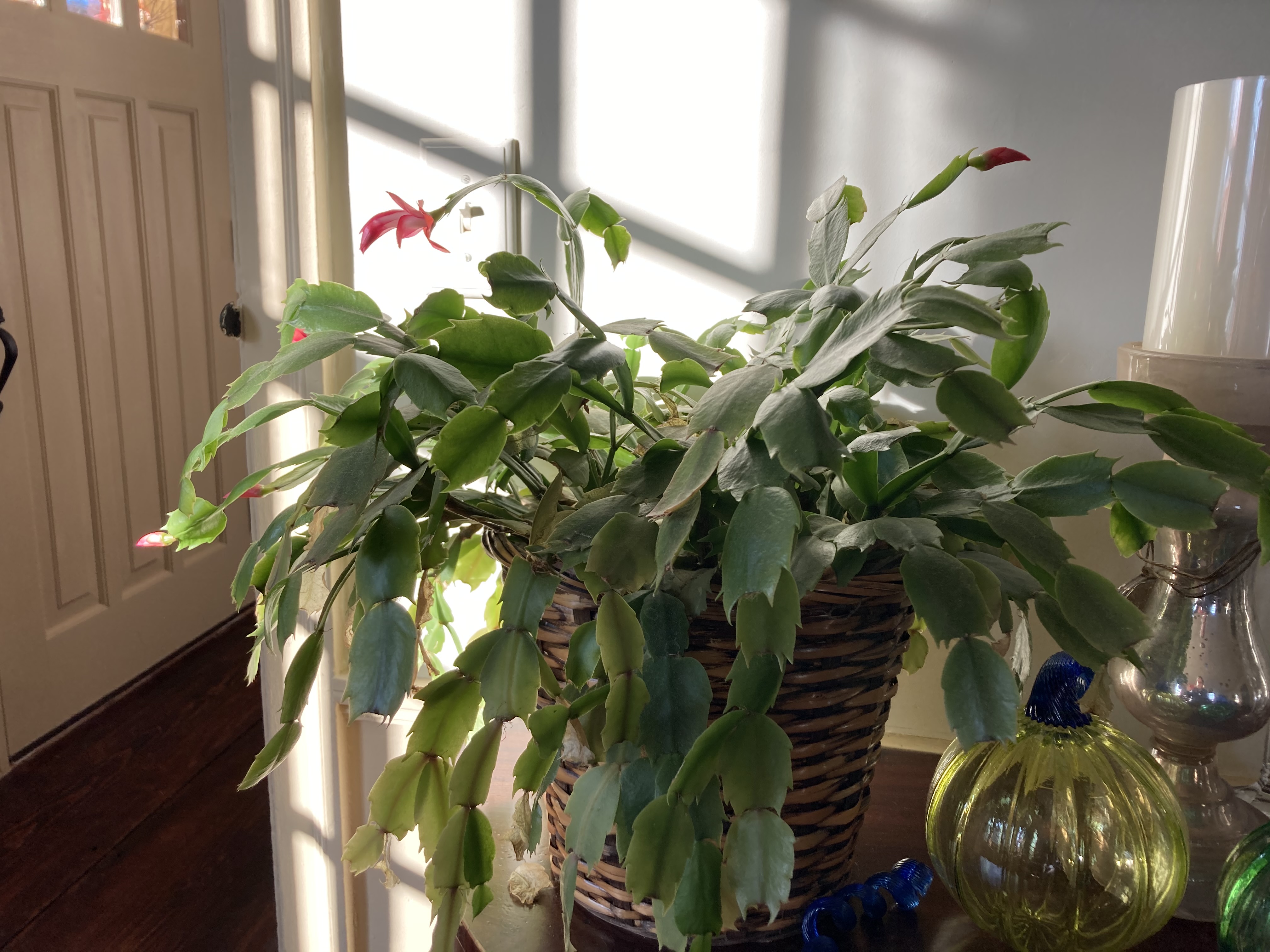
indoor garden plant: cactusia noelica indoorica
This Christmas Cactus was discovered lying on it’s side on the floor of a Walmart at Christmas time. One night after work I stopped on my way home from the office to shop for some ornaments. I wanted to decorate the first Christmas tree I would have living on my own after finishing college and moving into an apartment.
I had a big cart and was wheeling it around looking at boxes of glass ornaments, and strings of tinsel … there was Christmas music playing and I was feeling like I’d rather be in a cute little boutique shopping for ornaments than a grey, cavernous Walmart. But such was my budget.
Anyway, there it was on the ground in the middle of the aisle, potting soil spilling out of it’s broken pot: A little Christmas Cactus. I bent to pick it up and replace it on it’s shelf and noticed the potting soil was so dry it was like a weightless brick. I could hear it begging for rescue. Really, actually hear it. So, instead of putting it back on it’s shelf I put it in my cart and paid full price for it.
I know: bargain hunter, right?
Well, that plant has seen to it that I got a return on my investment. Every single year since then this cactus has bloomed for me no matter where I’ve left it in the house, or whether I’ve forgotten to water it. I’ve moved from place to place, leaving it here and there. Sometimes it isn’t happy with where I’ve place it, sometimes it is. But no matter it’s mood, that plant gives me flowers.
As you can see in the photo, it’s doing it again. I found a spot not far from a south window that it seems to like well enough. It’s faithful in its timing – it blooms every November and is done before Christmas.
I have a bunch of beloved house plants– they all have their own spirits and personalities. I’ll be writing about some of the plants I bring in to winter over in coming weeks. But this cactus is my favorite because of it’s loyalty and appreciation.
We should all have a friend like that, don’t you think? Mine happens to be a cactus.
When we moved into this farm it wasn’t with any dreams of reviving or farming the place. The truth is that this farm was already fully a version of it’s best self. The family before us had lovingly restored it and it was a working horse farm when we bought it.
Instead, we chose the property for what it would offer us–an opportunity to live in a house so thoroughly infused with grace, charm, and history, that it seemed nearly impossible to avoid living a charmed life within it’s old walls.
I’ve always had gardens, and installing them here was a labor of love–to be clear– love for myself. Installing a garden is really more an act of inspiration than construction for me, and trying to feel my way through creating a layout that would harmonize with this place’s energy has been a process.
I sought advice for the kitchen garden layout from Enchanted Gardens – a wonderful garden designer in Holliston– because I wanted something traditional and found myself hesitating to move established plants. The existing locataires–evergreens, mostly– had deep, firm roots and projected a sense of belonging that it was hard for me to get past. In the end, I changed little and am working around much of what was here.
That process made space in my mind to connect with the plants that were here and that I added. Their energy has a sentience that it isn’t hard to perceive once you start spending time around them. Most (not all) of them are good company; they have the ability to calm and encourage clarity. There are a few – nettle, for instance, that are less friendly. But generally, flowers and herbs are easy to connect with and have a quality of soothing that I imagine attracts many people to gardening.
Being among plants is an antidote to over-activated nerves, which seem to be ubiquitous in our modern environment and online-connected style of living. I’ve found myself gardening more and more over the years, allowing my time with favorite plants to encourage my intuition and beat back the stress of daily life.
So aside from nurturing the body with fresh vegetables, herbs, and flowers, being in the garden nurtures the mind and the emotional body, making way for inspiration and a sense of calm.
Why not plan a small project for the spring? A small garden – it could even be a container garden. The benefits and the beauty of being among and caring for live plants make the investment well worth it.
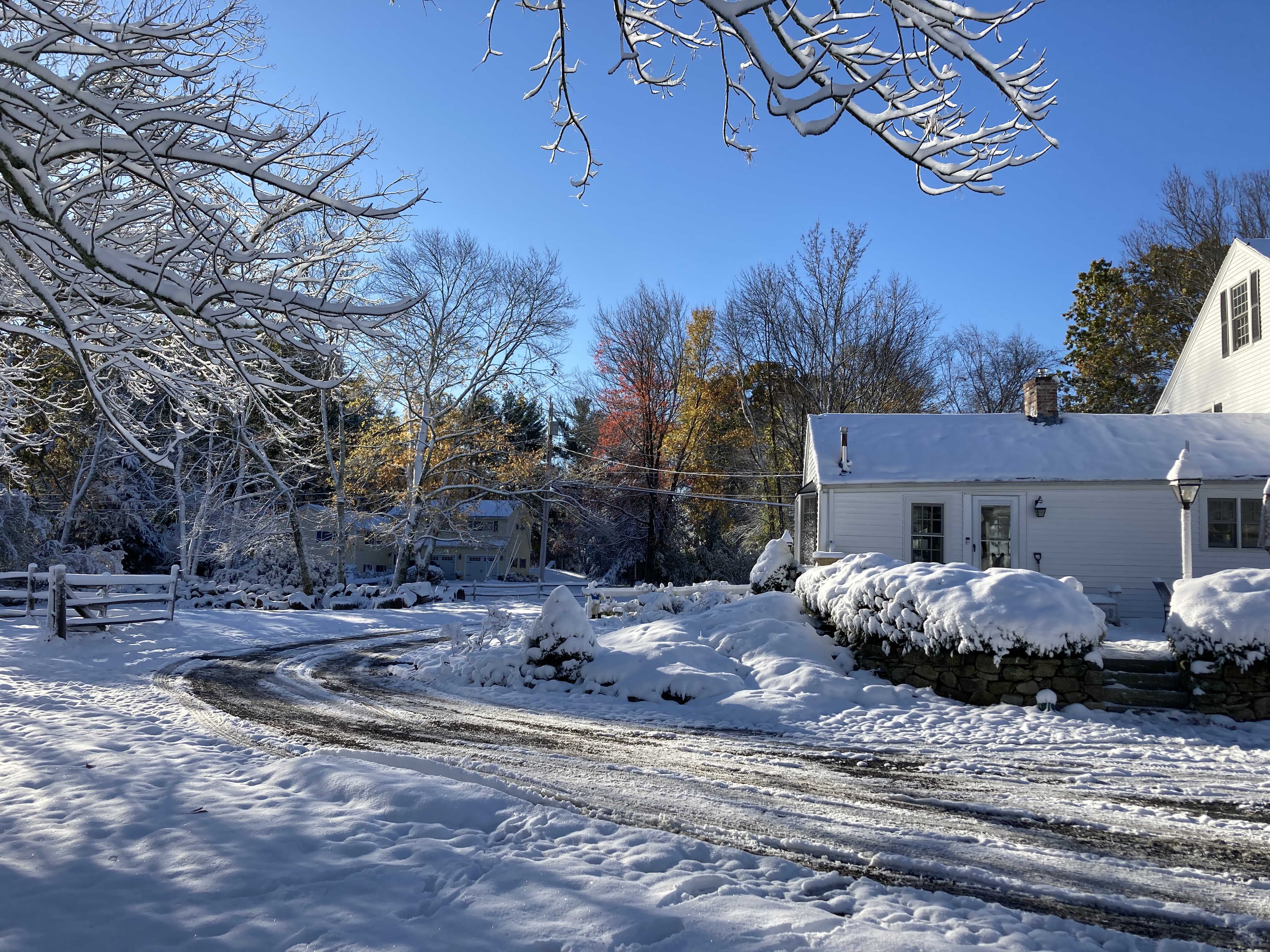
The early snow storm we had before Halloween was the end of the zinnia, the portulaca and other annual flowers, and remaining peppers, lettuce and radish. The montauk daisy’s glorious spray of blooms – now wilted, browned, bruised. On that morning I left the house to substitute at the local middle school, imaging a dusting or perhaps an inch of snow. But the snow fell and fell, making a 4-inch thick blanket on everything.
I returned to a garden on its way to winter dormancy.
Happily, I had already cut most of the herbs I wanted to save for winter before the snow came.
oregano, sage, thyme, and peppermint hanging to dry
There’s more to this than having herbs to cook with and make tea with. For me, bringing my friends in and enjoying them after they’ve gone underground is a joy and a comfort. There’s brightening peppermint tea from my cheeky, robust plants that only weeks ago were covered with bumblebees. And velvety, sun-loving oregano that had grown large enough to divide. Like gifts left by visiting friends.
The snow has receded for now, leaving auburn trees and sending flowering perennials into hibernation. Seeing them die back brings up a hopeful tug of anticipation for next year. Bittersweet hangs on some of my trees – a glorious murderer; beautiful, and choking the trees it hangs on. I resolve to cut some to bring indoors for decoration.
The last of the vegetable plants were cut and thrown into the compost last week. Hardier perennials, now mulched in, reach faded leaves toward gray skies.
Modern medicines have their deepest roots in ancient history. It’s said that an herbal compendium was created in the 28th century BC by the mythological chinese emperor Shennong (1). And interestingly, scholars say that intuition and trial and error led humans to believe that plants, animals, and minerals have medicinal properties. So humans have understood the value of connecting to and working with plants from our earliest days.
Food taken fresh from the garden has a quality of sweetness and plumpness that makes you feel good on its own — you can taste and smell the difference from food that’s been grown and shipped a long distance. But aside from the difference in freshness, the experience of seeing, smelling, and touching the plants that produce our food is nurturing and reassuring, as well.
Vines, plants, and trees all have their own energies and personalities, their own habits of growth and characteristics that, experienced alongside the fruits and vegetables themselves, allow one to connect much more fully and consciously with the food we eat. Also, getting to know what conditions they thrive in (and the ones they don’t thrive in) serves to deepen one’s sense of “knowing” the plants that provide us our food.
It’s not all rainbows and unicorns, though. This year I decided to try a new variety of tomato (yellow pear minis) that I’ve never grown before. With limited space in my garden, I planted leeks in the same bed, thinking I’d given both enough space. There were some plants that were crowded, though; the tomatoes grew tall and leggy and became a towering bed of beautiful smelling tomato plants, dripping with yellow fruit – and some of the leeks that sat in the shadow of my towering tomatoes didn’t get enough sun to grow big – they ended up being the size of scallions. 🙂
All the same, I started the year with not a shred of experience growing leeks and though I’ve bought many a leek in the grocery store I had no idea what I could expect the experience of growing them to be like (aside from my handy gardening book’s instructions). There’s no substitute for experience, as they say, and so I started with planting them, as instructed, in small seedling pots before the final frost and keeping them on a heated seedling mat with grow lamps/sunlight on them. New England springs can be pretty rainy so on gray days they were under the lamp. On sunny days they sat in a south window or on our patio.
leek and tomato seedlings in the spring sun
They started out teeny tiny. Like little green hairs growing out of the potting soil. And they weren’t much bigger than that when I put them in the ground. I wasn’t sure they would survive, they seemed so small when I transplanted them that I worried they would wash away with a good rain. But they took off — and the ones that had enough sun grew into proper, good sized leeks. Now I understand why mounding dirt around their bases is important – you get much more useable white leek if you do that. So much for my adventure with leeks!
The experience of growing these little plants gave me a sense of connectedness and belonging that’s hard to describe and even harder to overstate. It was like making a new group of friends and now, when I think of vichyssoise (potato leek soup) I think of their tiny little seeds, and of the investment of time, love, and light required to grow them in the northeast. I think of how darling they are until they become towering allium – fresh, strong, and all grown up by the end of the growing season. In a word, I feel connected to them.
After harvesting the leeks I did precisely what I’d intended to do when I planted them: I cooked with them. Vichyssoise (recipe in The Joy of Cooking) and a beautiful braised chicken dish from GardenintheKitchen.com.
The leeks felt like a gift given graciously by the planet, and cleaning and slicing them for our dinners bestowed warmth and a sense of connection and familiarity that I relished–like the satisfaction and pleasure of having carnal knowledge of a love interest. Magical, indeed.
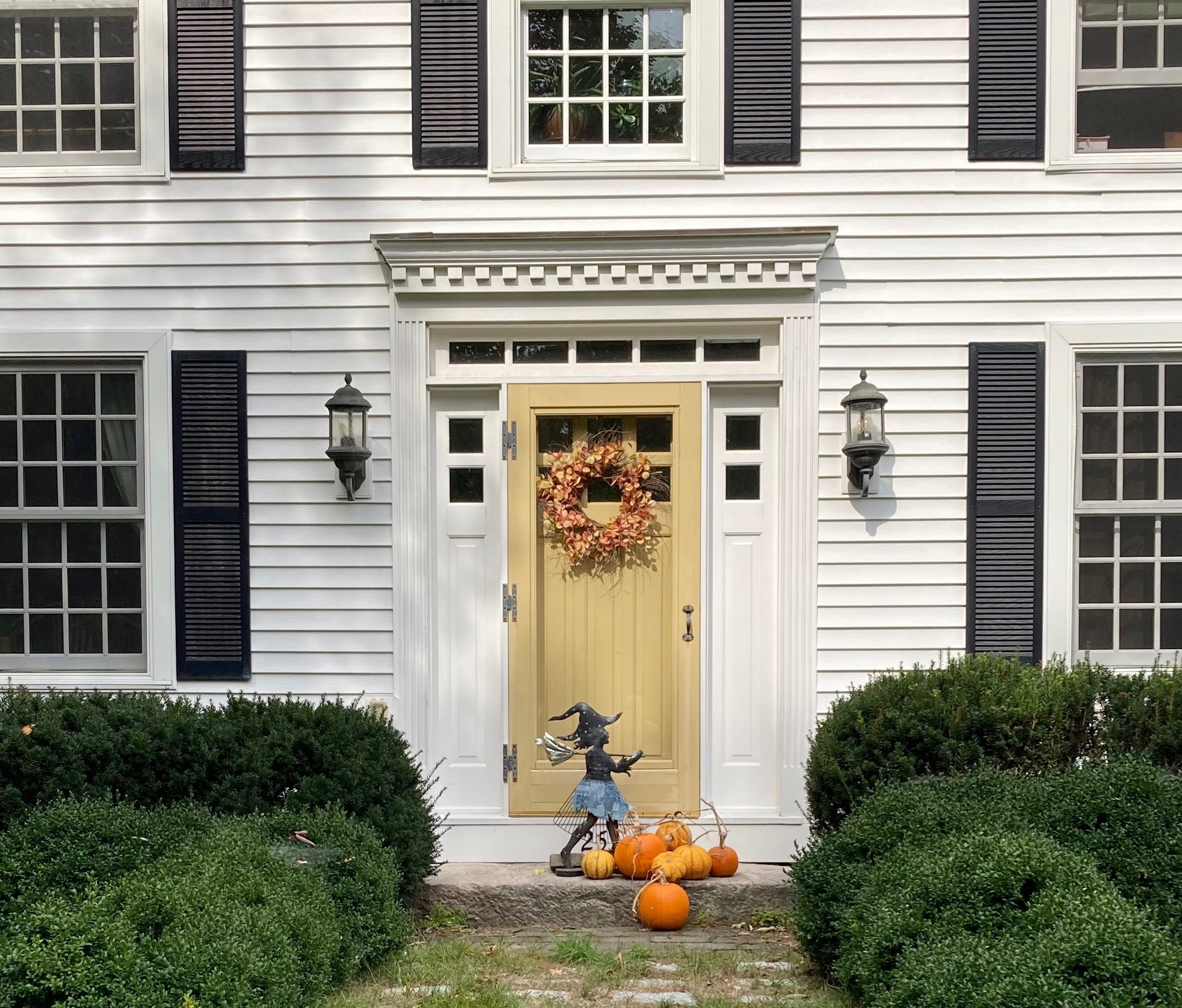
I’ve always regarded Halloween as the last harvest, and the time to welcome visiting ancestors who journey back to check in for the night. Some years I set extra spaces at the table and set out some old photos. This year was nice for me, because usually I have to delay my Samhain supper and/or ritual work for after the trick-or-treaters have come and gone but since Covid made putting a bowl of candy with lights and decorations the expected norm here in suburbia this year, I was off the hook! I put out my bowl, lit up my little witch, and was free to observe my holiday.
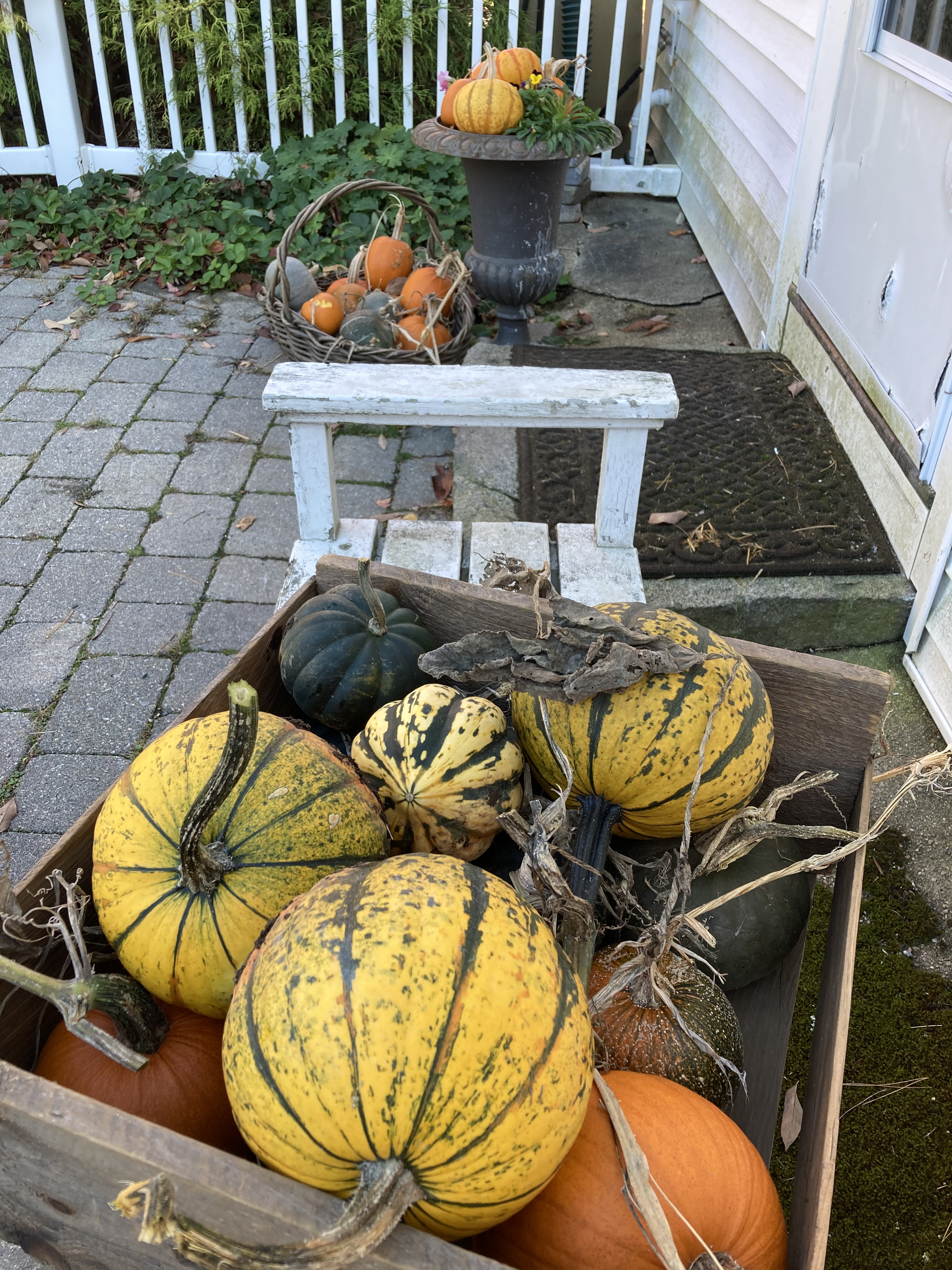
pumpkins for halloween decor
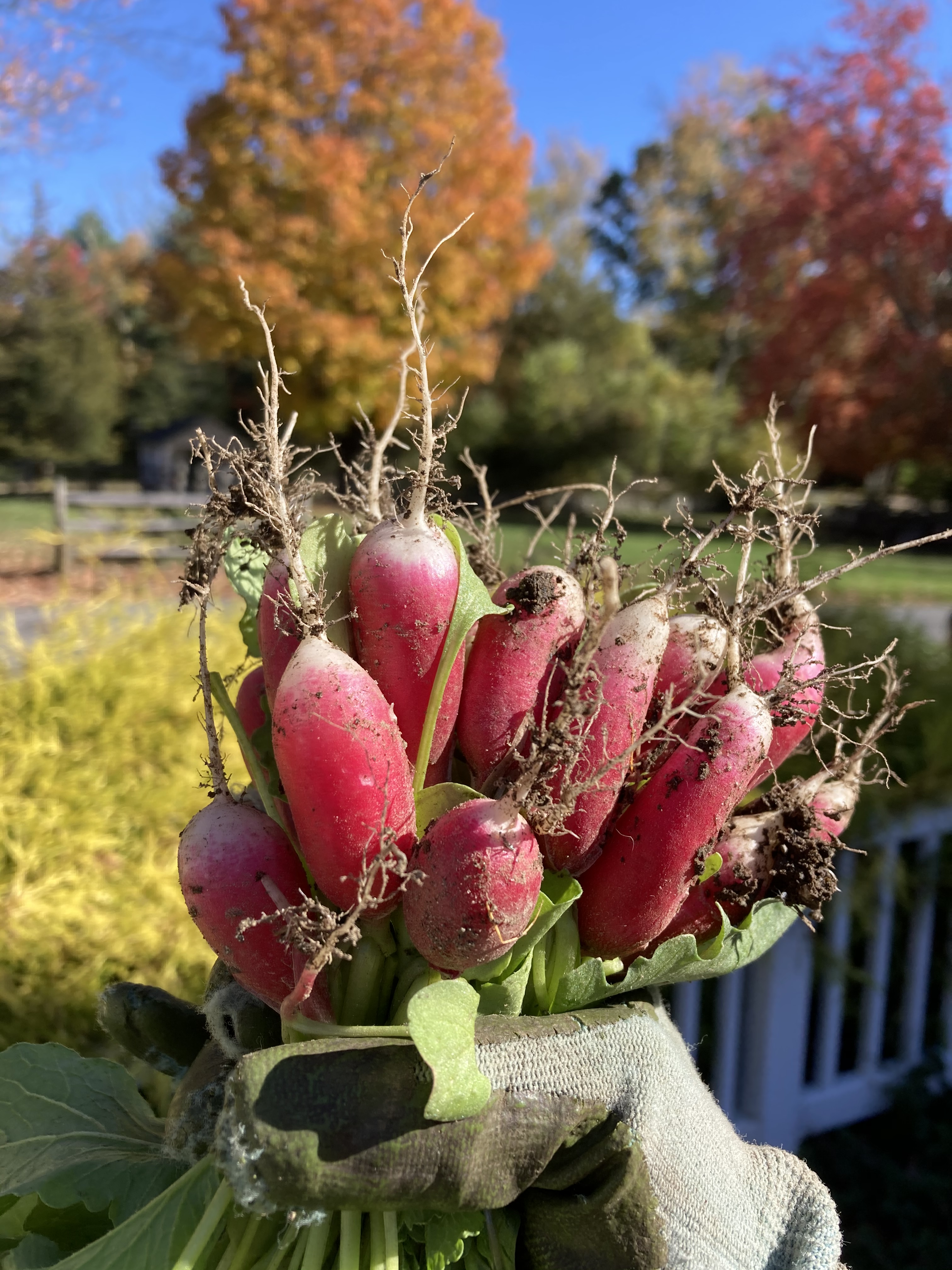
Along with my traditional Halloween activities, this year we had a pile of pumpkins and squash, radish, final peppers and tomatoes to collect.
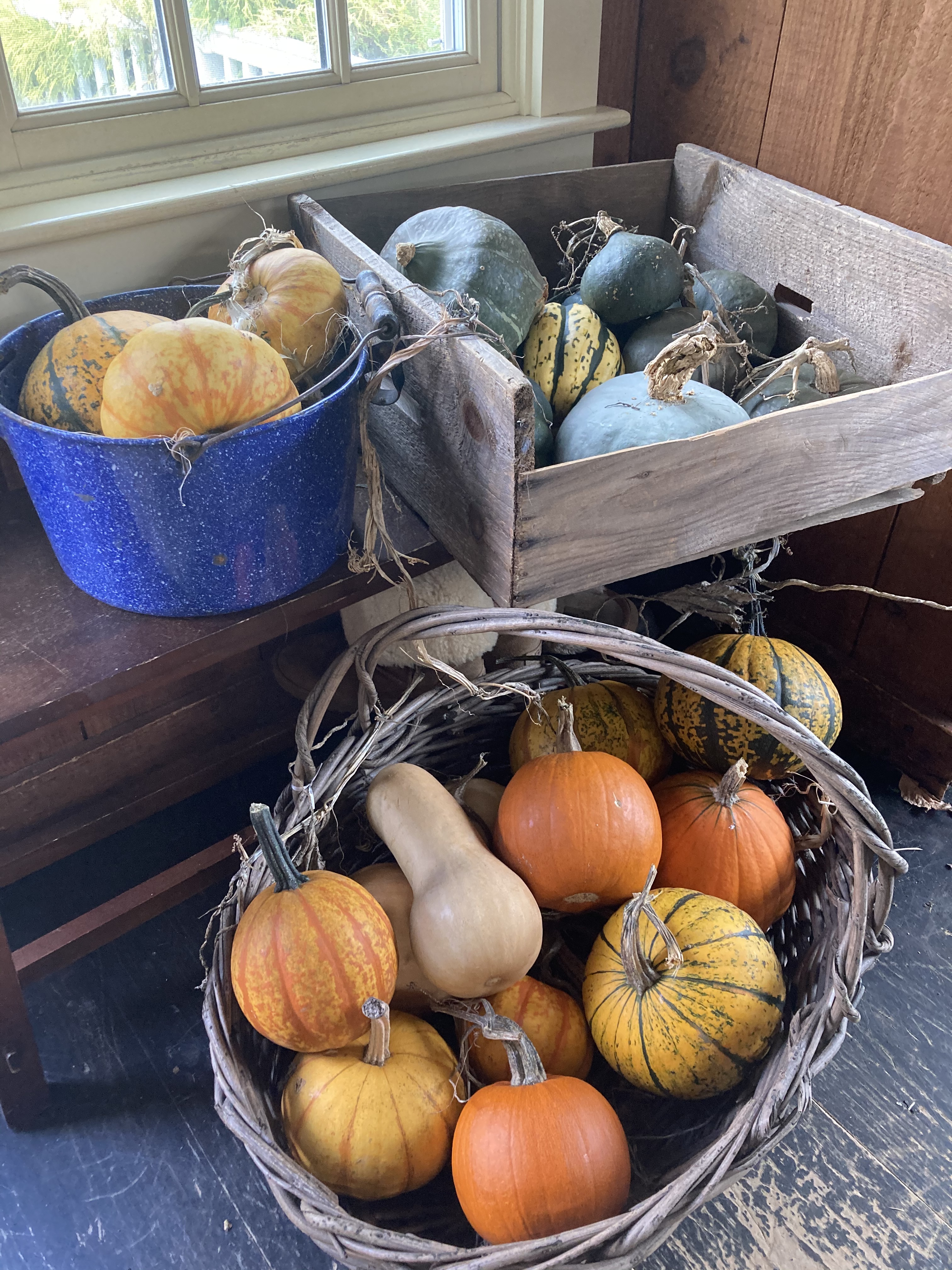
We had so many pumpkins volunteer this year – so many colors and designs on them – that I have spent the past couple of days cutting, peeling and cooking to make mash for cookies, breads, and pies. It turns out that if you throw your pumpkins and squash seeds in your compost you don’t need to plant them in a garden bed – they pop up all over the place. The difficulty was choosing which plants to keep since we weren’t sure what kind of squash each plant was – so we selected for the location they chose to grow in and got a mix.
volunteer pumpkins and squash piling upa lot of pumpkin mash!
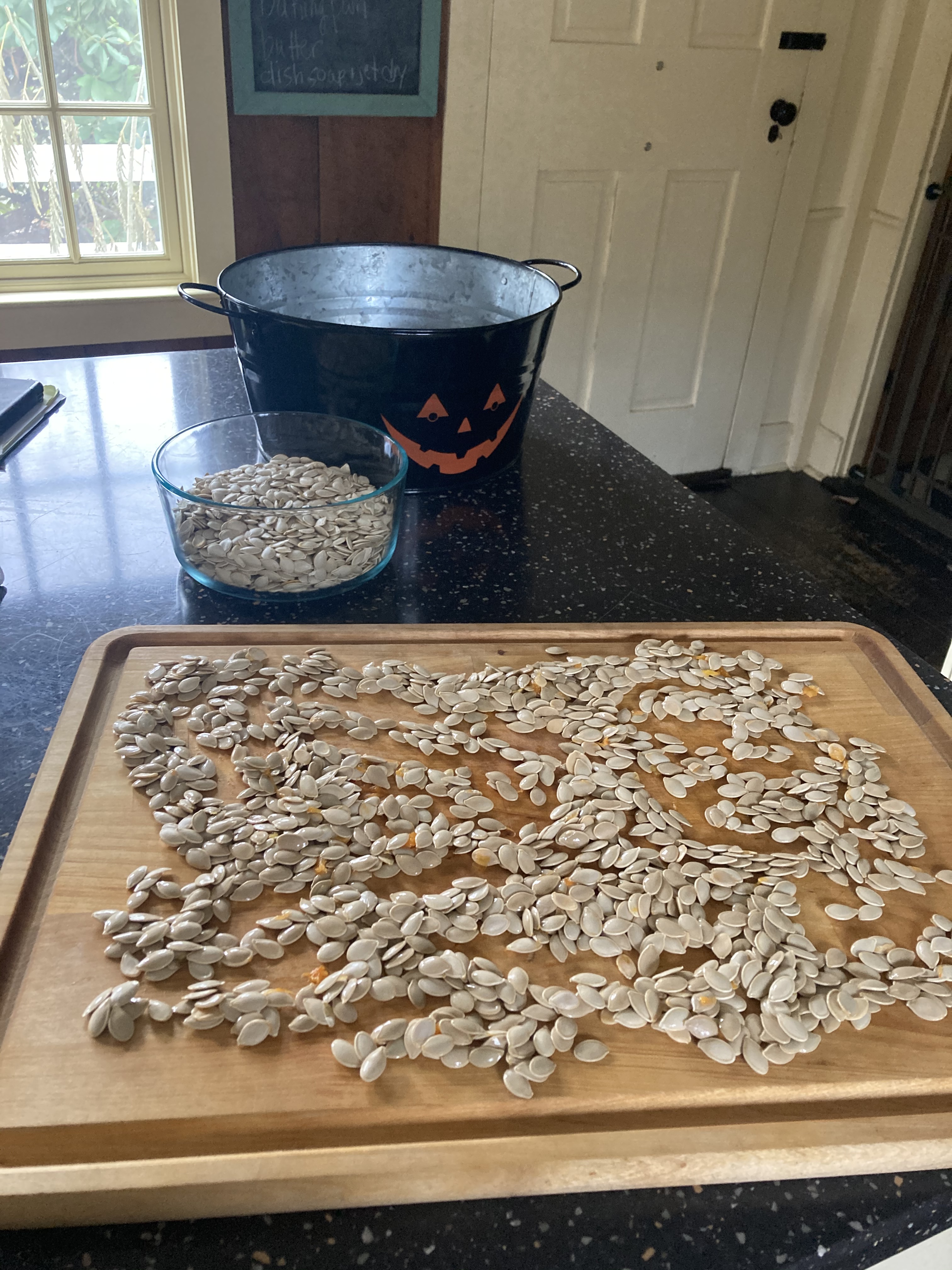
This might seem like a lot of work but I have a recipe for bourbon pumpkin pie that I kept firmly in mind as I peeled. And since the seeds are the most nutrient-rich part of the pumpkin…
drying pumpkin seeds to roast later
… we are drying them to roast later. I found that a bread board was a good way to dry them since they stick to paper towels, parchment, even plastic.
There may have been a small amount of halloween candy consumed to keep my strength up as part of this exercise. 🙂
We’ve made a few big pots of squash soup, which is a favorite around here, and some of what’s still waiting to be cooked is headed for the root cellar.
In all we’ve had a good harvest for the little plot of earth we grew vegetables in this year and I’m ready to eat squash and pie. Maybe I’ll add a little bourbon to keep warm!
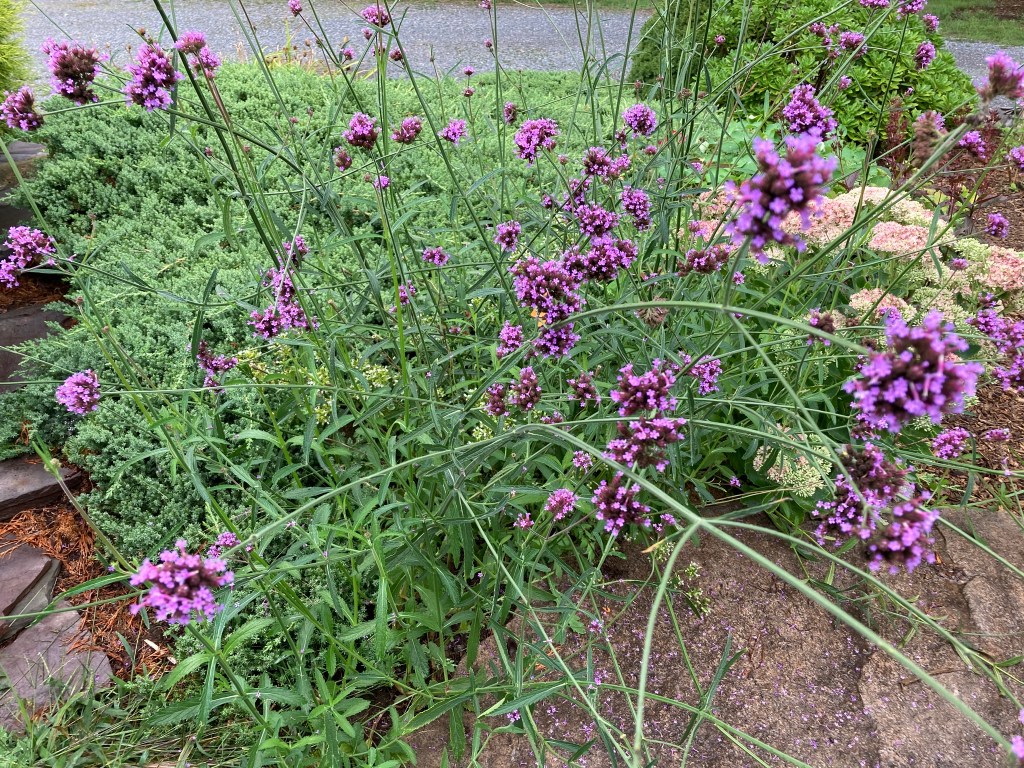
October in New England is all about transition: from brilliant flaming leaves all around to subdued russets and bare limbs; from verdant final zinnia, verbena, squash, peppers, tomatoes, leeks, and potatoes to frost and empty garden beds. Right around now I start reading to remind myself how to put everything to bed for the winter.
The change-over inspires me to pause and think about what I can do with a winter’s rest. What dreams light me up? October– which ends with the Celtic New Year Samhain, better known in the states as Halloween –is a time to set intentions that will carry you through another growth cycle.
This year I was inspired to create garden structures. I wanted to expand my vegetable garden and to create a traditional kitchen garden. Both of my garden spaces felt disorganized; to me the appearance of my garden is as important as the health of the plants and what they produce. So I wanted to spend time this year creating beautiful structures for my vegetables, flowers, and herbs.
The vegetable garden is an area that was once a horse’s pen, adjacent to our stable. It had an irregular shape and was too small for the rows I wanted to plant. So we started there, drawing a plan – actually we made several drawings, debating the merits of each, before settling on one and on the size of the garden. We measured it, looked online for fence posts, settled on 9 foot posts at lowe’s since we have deer that jump through that space, and installed them using a small sledgehammer. We put wildlife netting on the top portion and a heavier gauge wire fence on the bottom for deer and rabbits/woodchucks, which had mixed effectiveness since a rabbit got to my carrots.
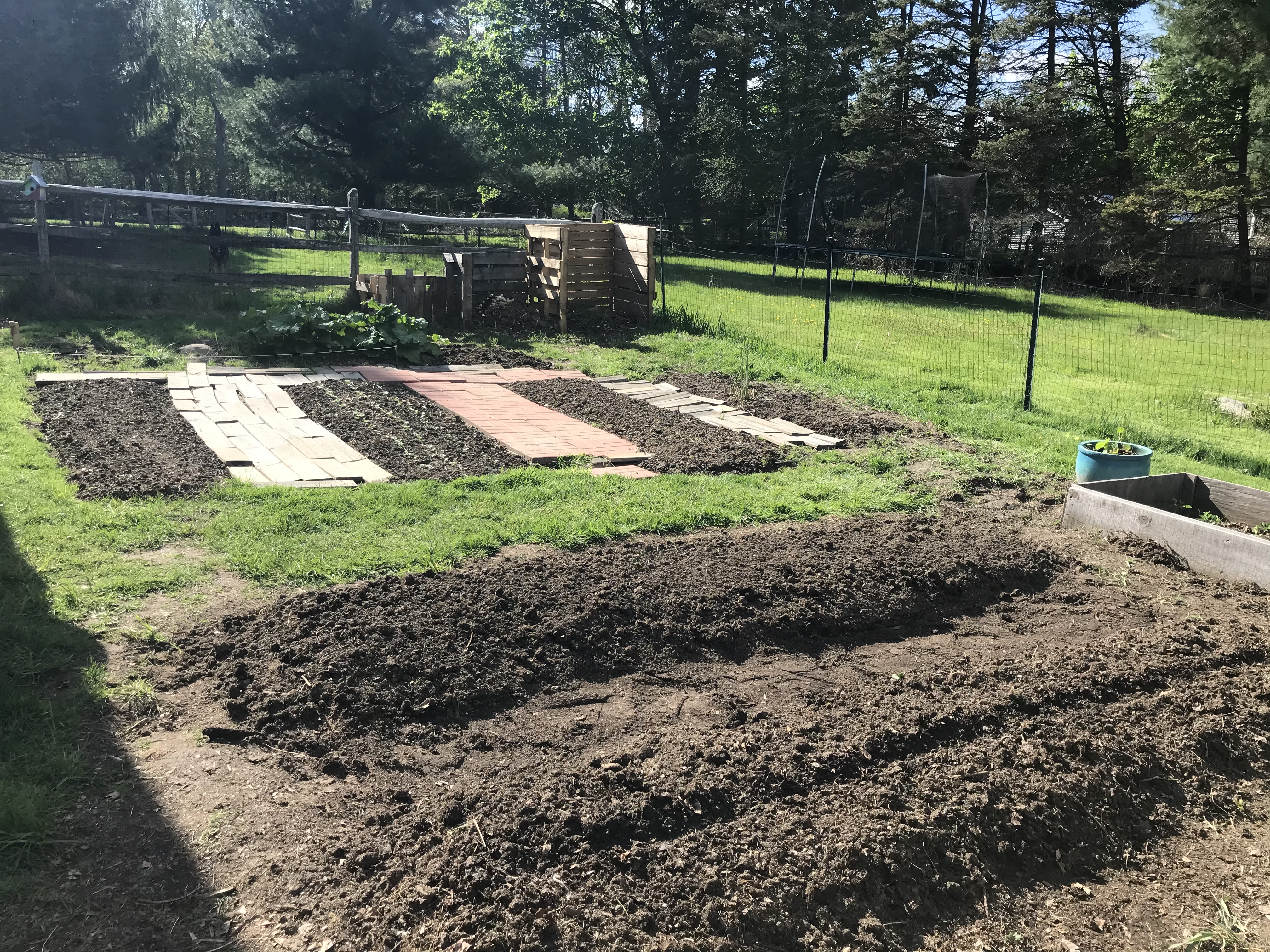
I used some old boards and pavers I had collected to help managed weeds between the rows, and Jon moved our compost pile to the back north corner. We created a box to house strawberries and created new beds for squash, pictured here in the forefront of the picture. Beds of cucumbers, peppers, lettuce, radish, asparagus, and green beans are seen here further away.
freshly planted vegetable garden beds during spring 2020
This project started with a feeling early last winter that I wanted an installation to garden in. It will carry on for a few years as I buy pavers and lug them out back to level the ground and seat them. I do this myself and it’s time consuming but it gives me a feeling of satisfaction to construct the space with my own hands.
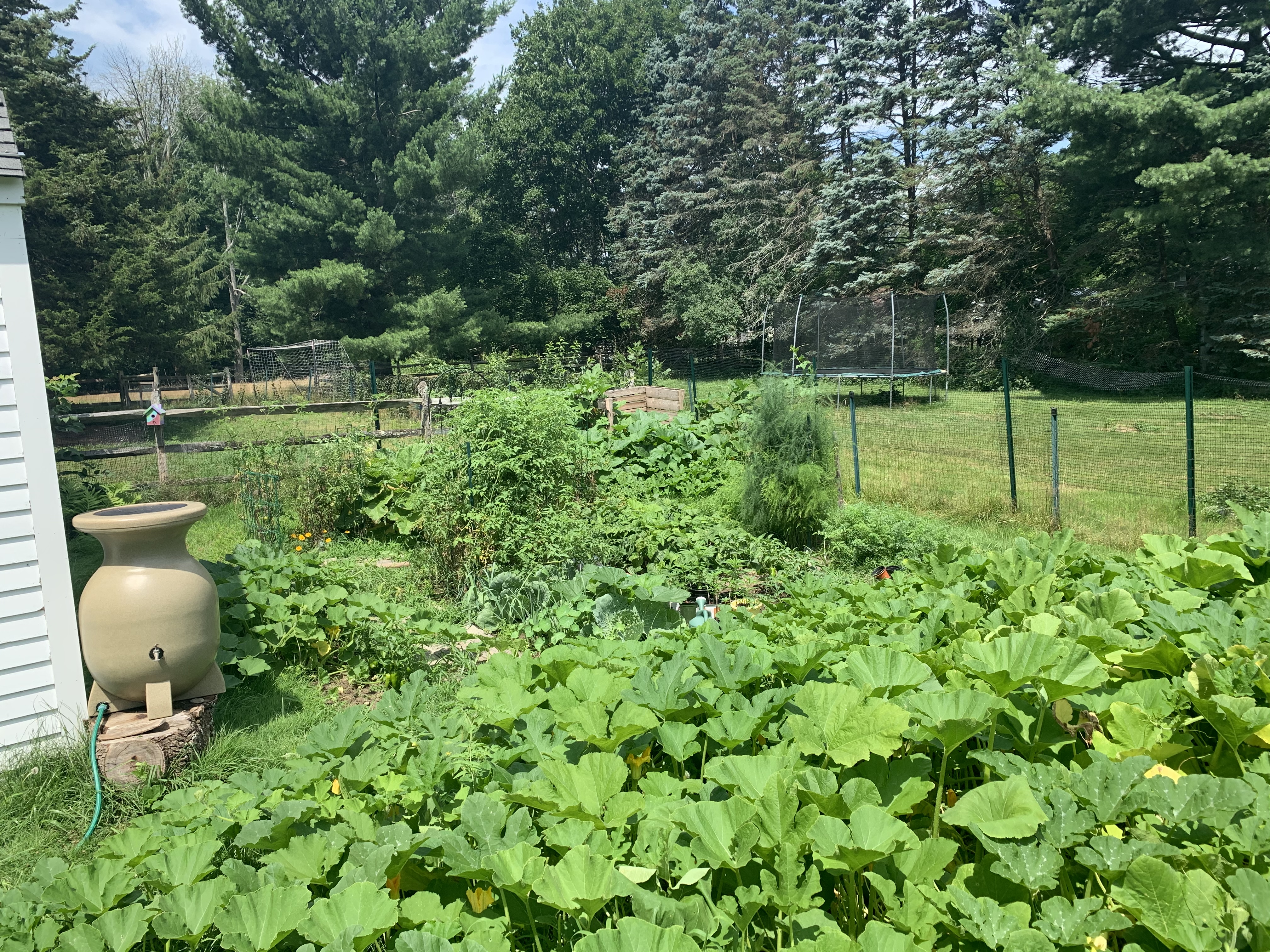
Below, a photo of a few weeks later — the structure was hard to see from outside the garden but the walking paths all made getting around easy and pleasant:
vegetable garden in june
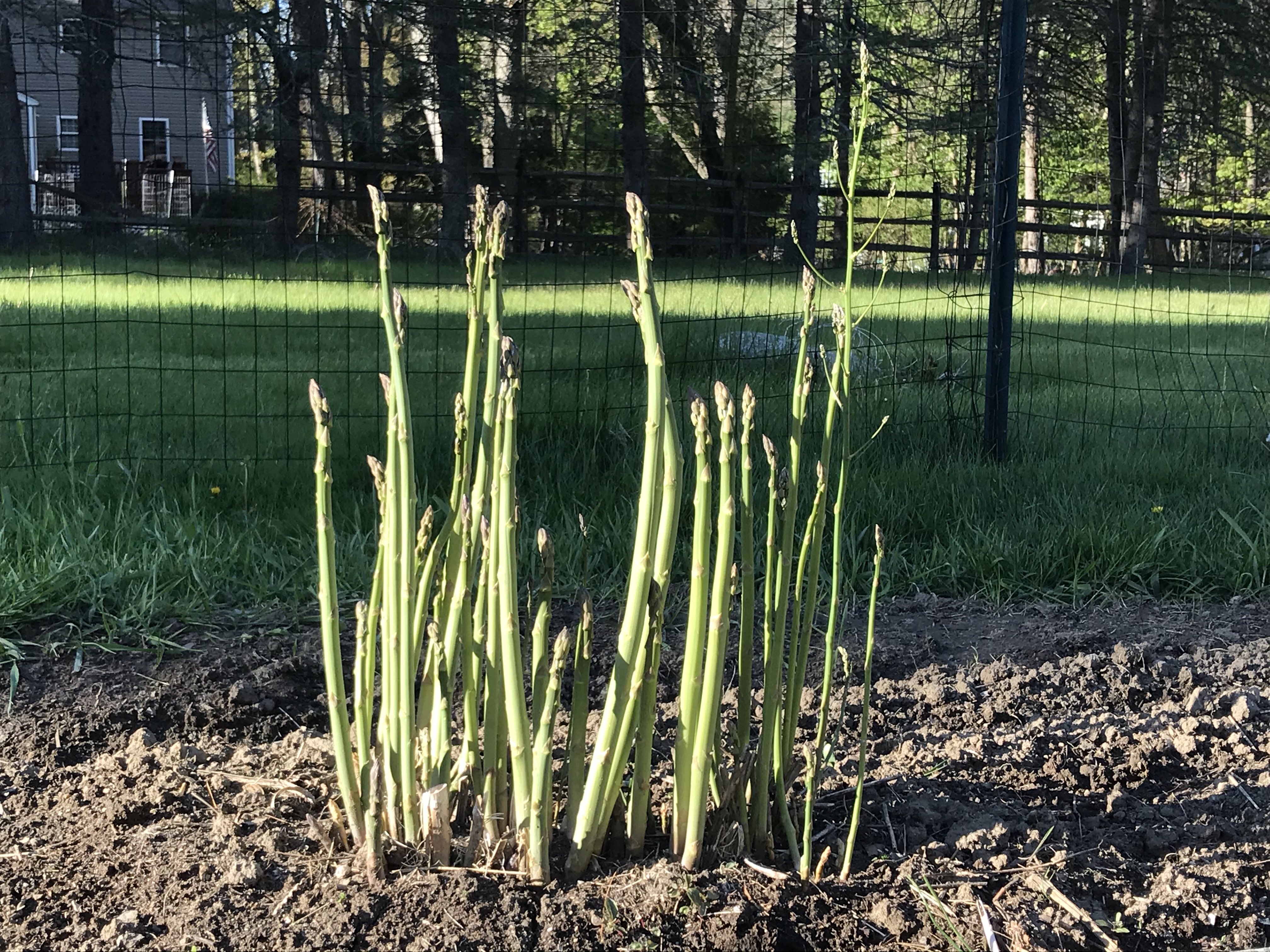
Asparagus in May
The vegetable garden produced a ton of food this year. It’s not exactly what I want it to be, yet: the walkway between the asparagus and what was green beans and peppers this year is too narrow. I’ll figure out how best to fix that for next year and I’ll tune the design and lay walkways and more trellising to support tall tomatoes and peppers.
Long winter nights bring a kind of mystery and magic that lends itself to connecting with hidden, heart felt desires and creative urges. There’s time to imagine how projects and ideas will come to life when the days lengthen and warm and the asparagus, bulbs, and forsythia are emerging and blooming…
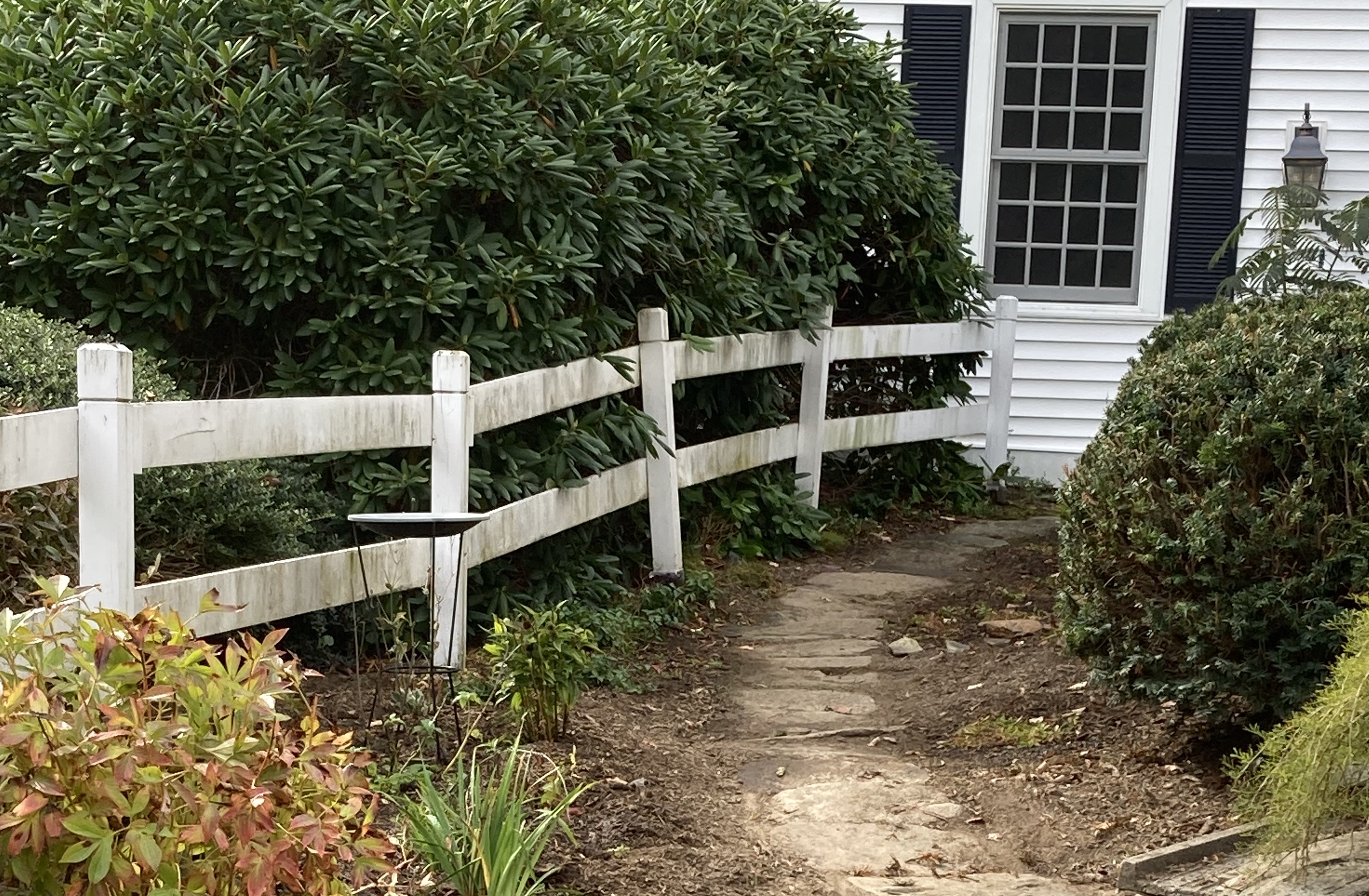
We have a little stone walkway that leads to our kitchen door; it ends, or begins, at our driveway. Next to the walkway I’ve planted herbs—many of which I brought with me from my last little house — to cook with. Also, they make my house a home.
Pathway to herbs and grassy hill from garden
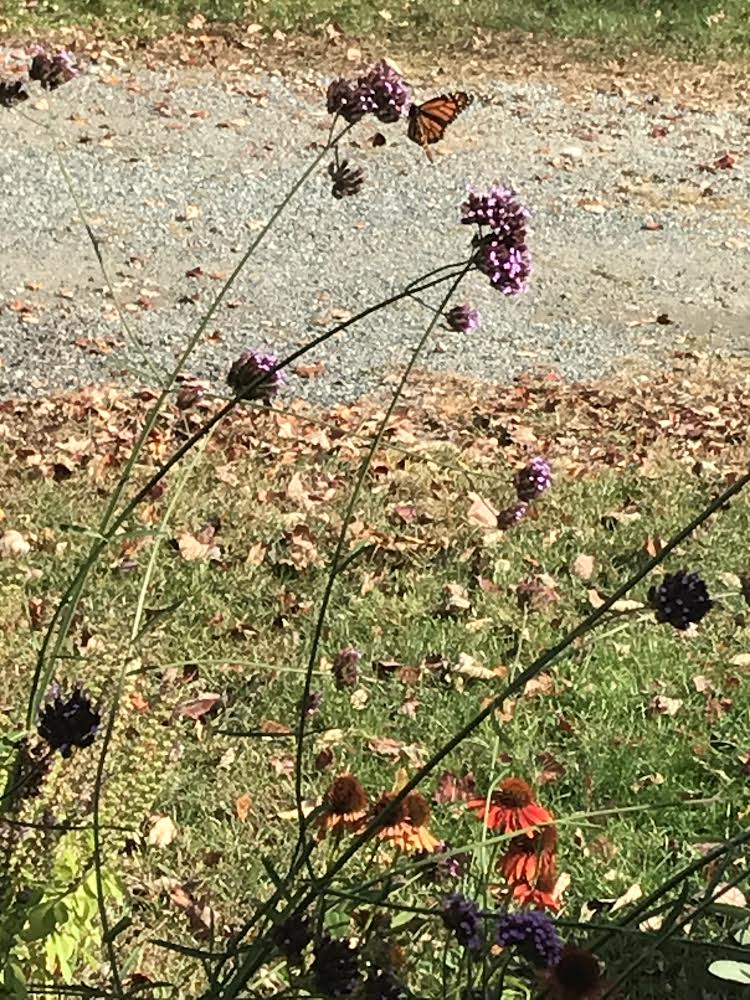
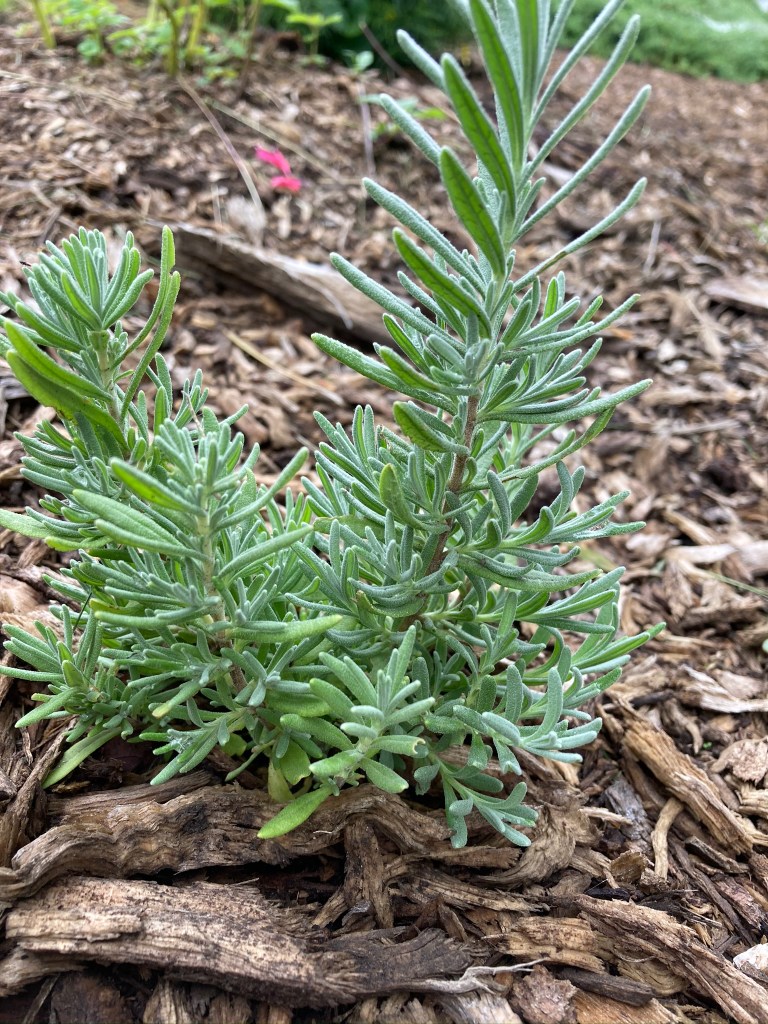
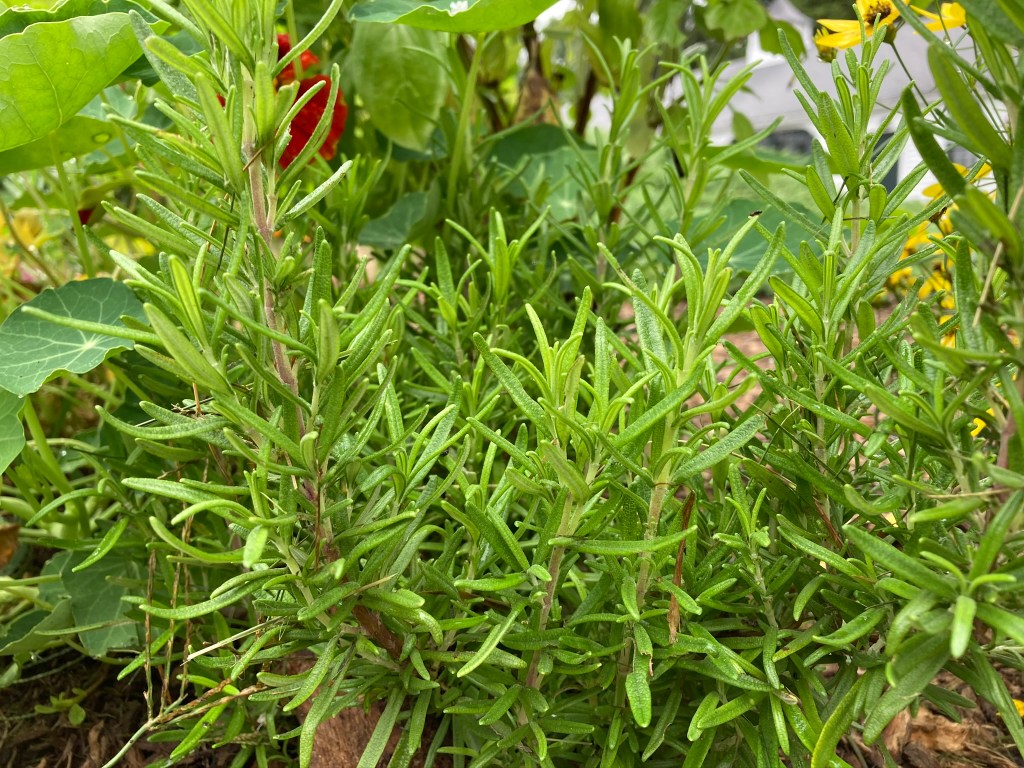
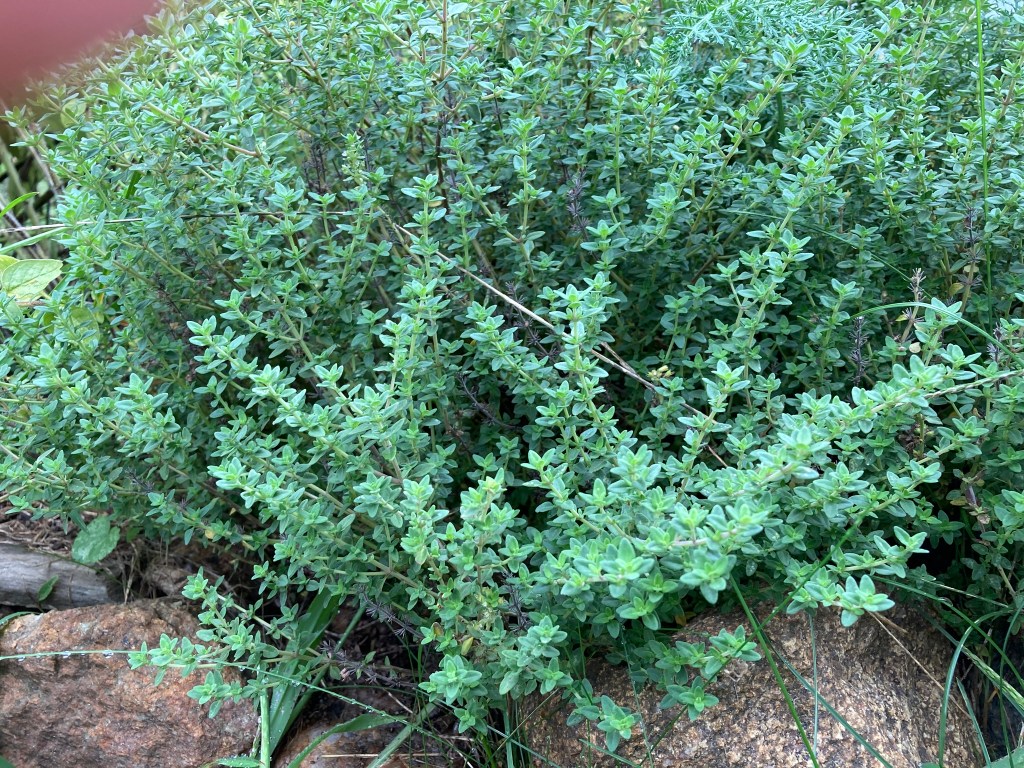
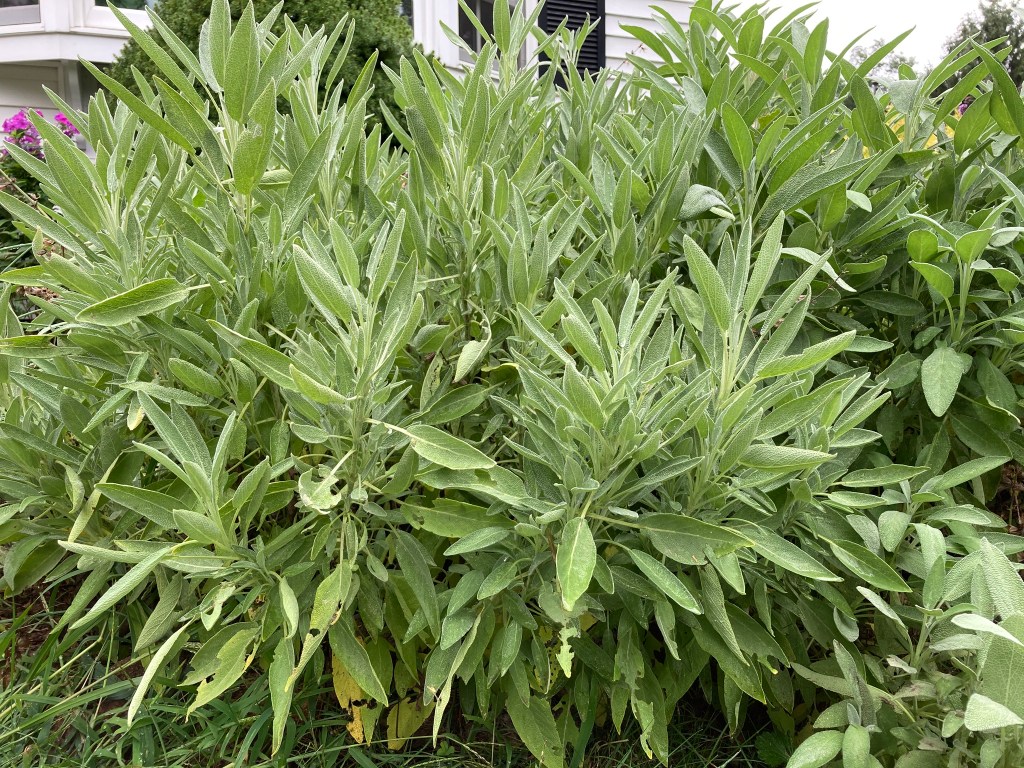
Each of these plants has it’s own energy and, I believe, sentience. For years I’ve had thyme, sage, peppermint, rosemary, and oregano growing. There’s also lavender, tulsi (holy basil), basil, parsley, lady’s mantle, lemon balm, lemon verbena … I know these plants; the perennials have been split, moved around, and taken root in more than one place around the property. The self seeding plants have reappeared, magically, near to their original spots. They have been in my cooking, giving flavor and brightness to our meals, been tea, food for butterflies, hummingbirds, yellow finch.
This spring I decided that I wanted to create a proper kitchen garden and add to this group, but I felt stuck as I tried to imagine a design that I could create.
The spot I had in mind next to the kitchen has a slope. It used to be a barn, actually, which is a bit mysterious to me since I would expect the spot the barn stood on to be flat. The barn, now gone, was blown over by a hurricane in 1933. Since the barn’s demise, the spot acquired grass to become a grassy hill next to the house with a few well-established foundation plantings.
Grassy hillside between kitchen and driveway
I hired enchanted gardens, Jana Millbocker, to create a design for me since I was having trouble imagining my little hillside transformed. She did, measuring and photographing the hillside, and drawing on traditional designs.
It’s autumn in New England and so creating the structure is what I can do, along with relocating existing plants to their new homes. I’ve been at it for weeks, constructing a stone retaining wall, removing turf, moving plants, laying pea stone:
New herb garden. Bones!
Next year, some of these will mature and grow and there will be a host of new residents added. Borage, bronze fennel, basil, tarragon, others.
So, with winter about to descend I’ve paused construction to enjoy the flaming autumn colors all around us and to give extra love to my relocated friends …



















 Backyard Botanics